Japanese Gremlins Session Script
Personal script owned by actress Maya Okamoto
Introduction
When Gremlins (1984) prepared for its prime-time television debut in Japan, the Fuji Television Network undertook a full re-dub of the film—an effort that brought together some of the country’s top voice actors and directors to reinterpret the American classic for a Japanese audience.
Dubbing a film of this scale requires far more than simply translating lines. Every moment must be re-performed, re-timed, and emotionally recalibrated so the new audio track matches the original actors’ performances, lip movements, and tone. The Japanese adaptation of Gremlins was handled by an experienced ADR team who worked meticulously to preserve the spirit of Joe Dante’s film while making the dialogue feel natural in Japanese. Their work ensured that humor, tension, and character nuances all carried across cultural and linguistic boundaries.
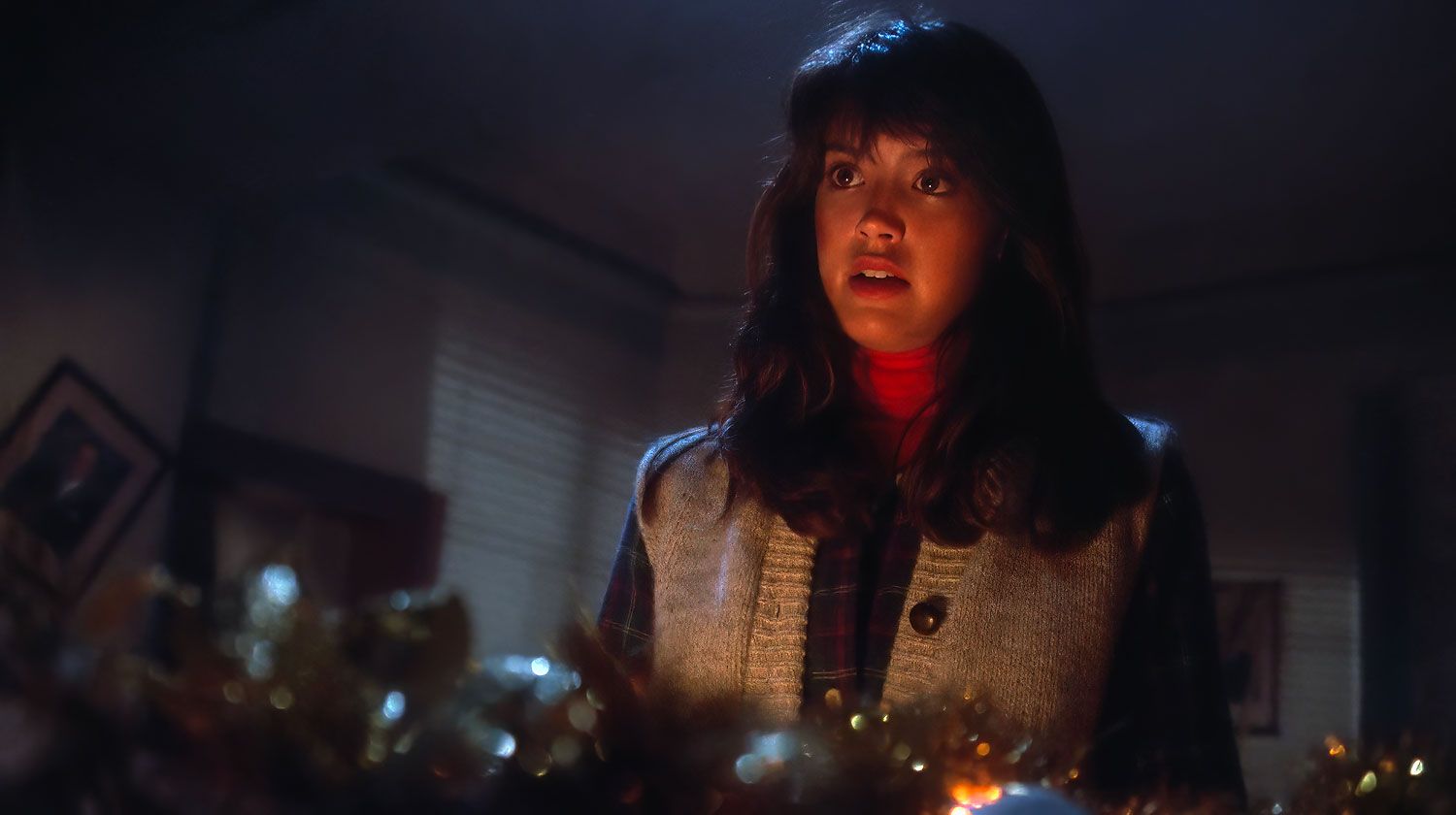
Among the cast brought in for the project was actress Maya Okamoto (岡本麻弥), who was hired to voice Kate (portrayed by Phoebe Cates in the original). Her working notes—handwritten rewrites, timing cues, and performance adjustments—offer a rare glimpse into the craft behind Japanese ADR during the 1980s. These annotated script pages document the intensity and precision of her March 19, 1988 recording session, completed just weeks before the re-dubbed version aired on Fuji TV on April 2, 1988.
What follows is a look inside that process: the working materials that shaped the Japanese television broadcast of Gremlins, and a small but fascinating chapter in the film’s global history.
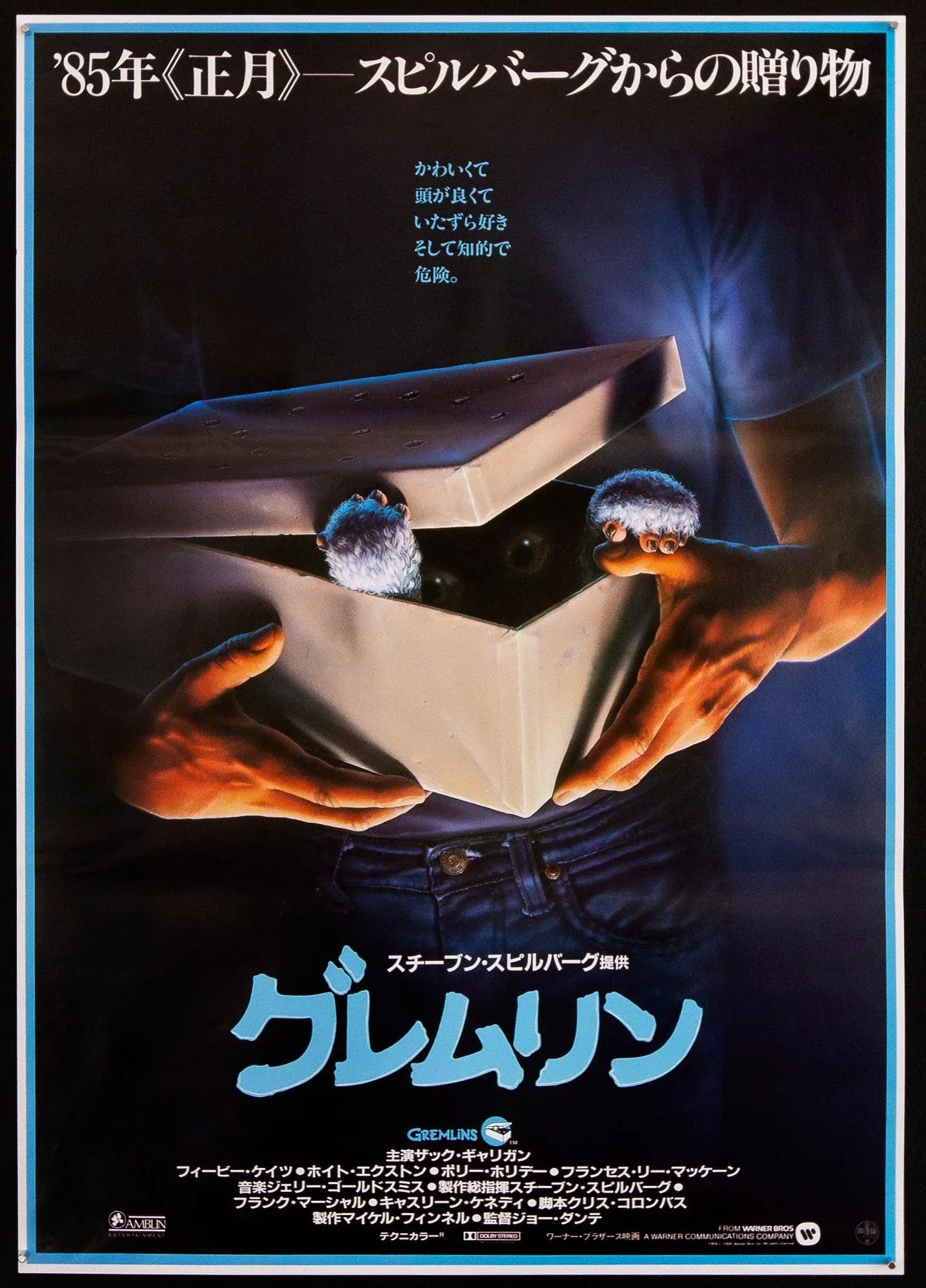
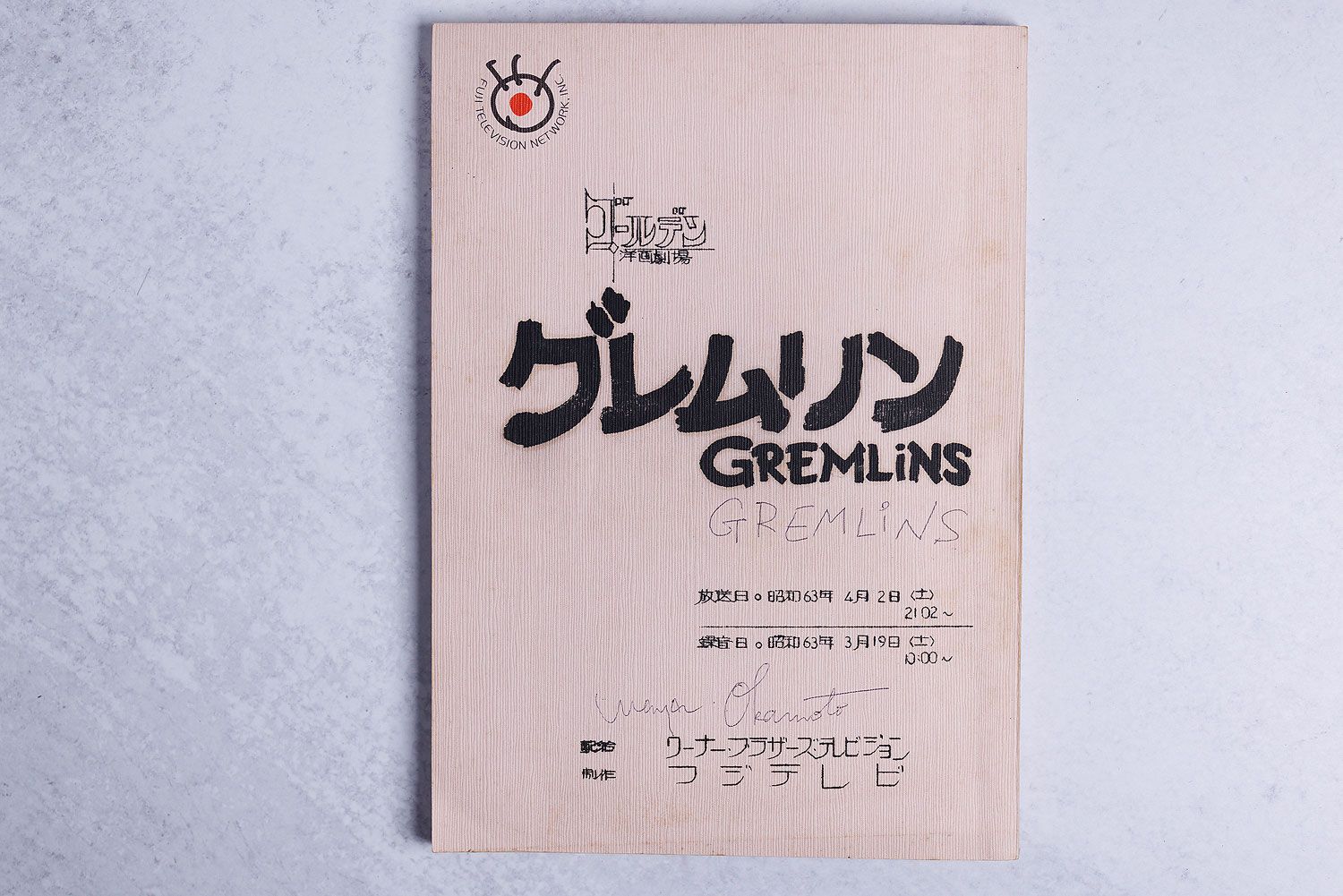
Top Logo: Golden Western Movie Theater (Golden Yōga Gekijō - A famous Japanese TV block for movies)
Main Title: GREMLINS (Written in large Japanese Katakana: グレムリン) (Written in English text below)
Schedule Information:
- Broadcast Date: Showa 63 (1988), April 2nd (Saturday) at 21:02~ (9:02 PM)
- Recording Date: Showa 63 (1988), March 19th (Saturday) at 10:00~ (10:00 AM)
Bottom Credits:
- Distribution: Warner Brothers Television
- Production: Fuji Television
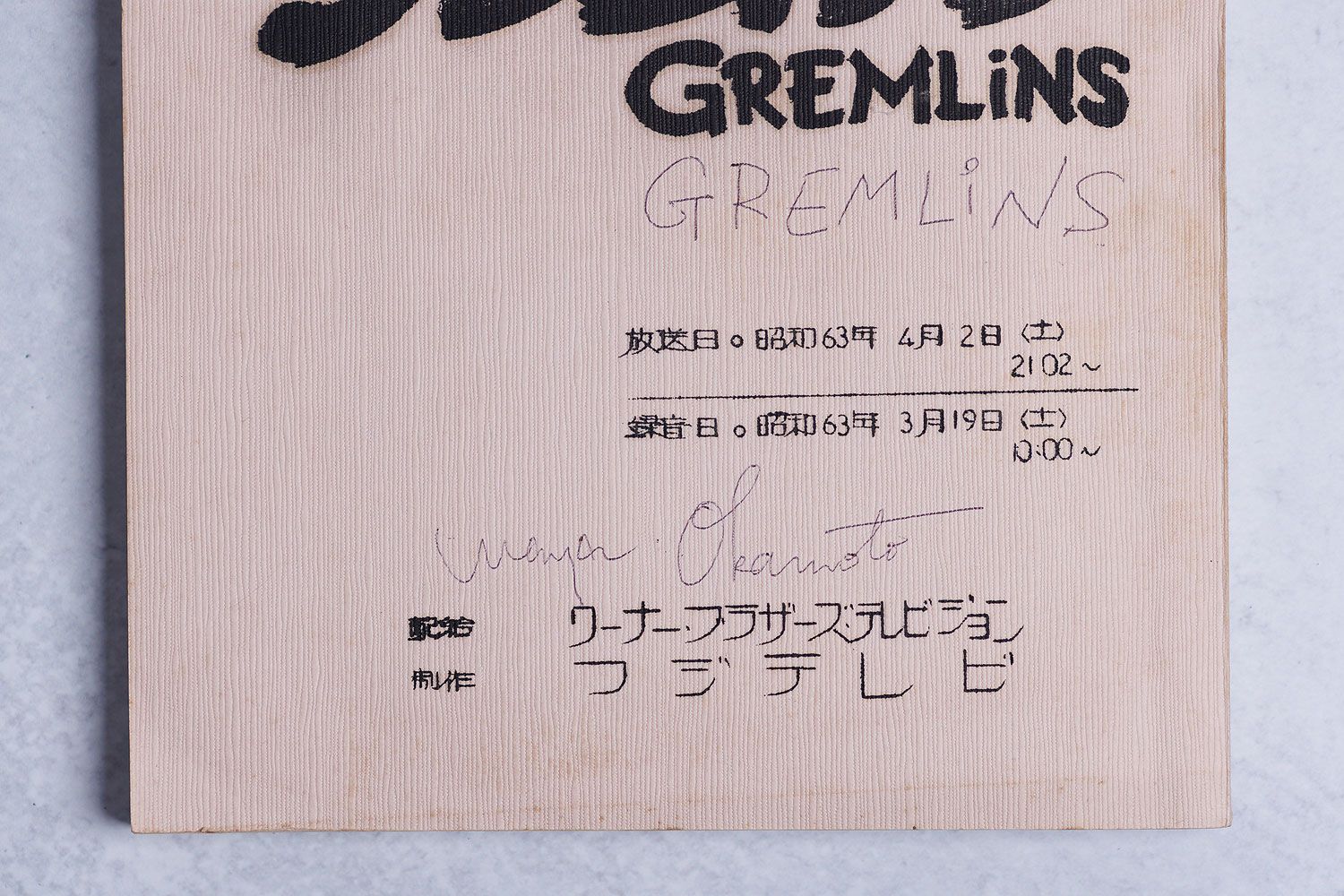
What’s especially fascinating about this script is the sheer amount of personal notation Maya Okamoto added throughout its pages. With help from Japanese colleagues, we’ve learned that many of these handwritten annotations were her way of loosening the stiffness that can come from direct translation. Rather than simply reading the literal Japanese script, Okamoto adjusted phrasing, timing, and emotional cues to make Kate’s dialogue sound more natural—closer to how a real person would speak and more faithful to the warmth of Phoebe Cates’ original performance. These notes offer a rare glimpse into a voice actor actively shaping and refining a character during the ADR process, giving the Japanese dub its own sense of authenticity and personality.
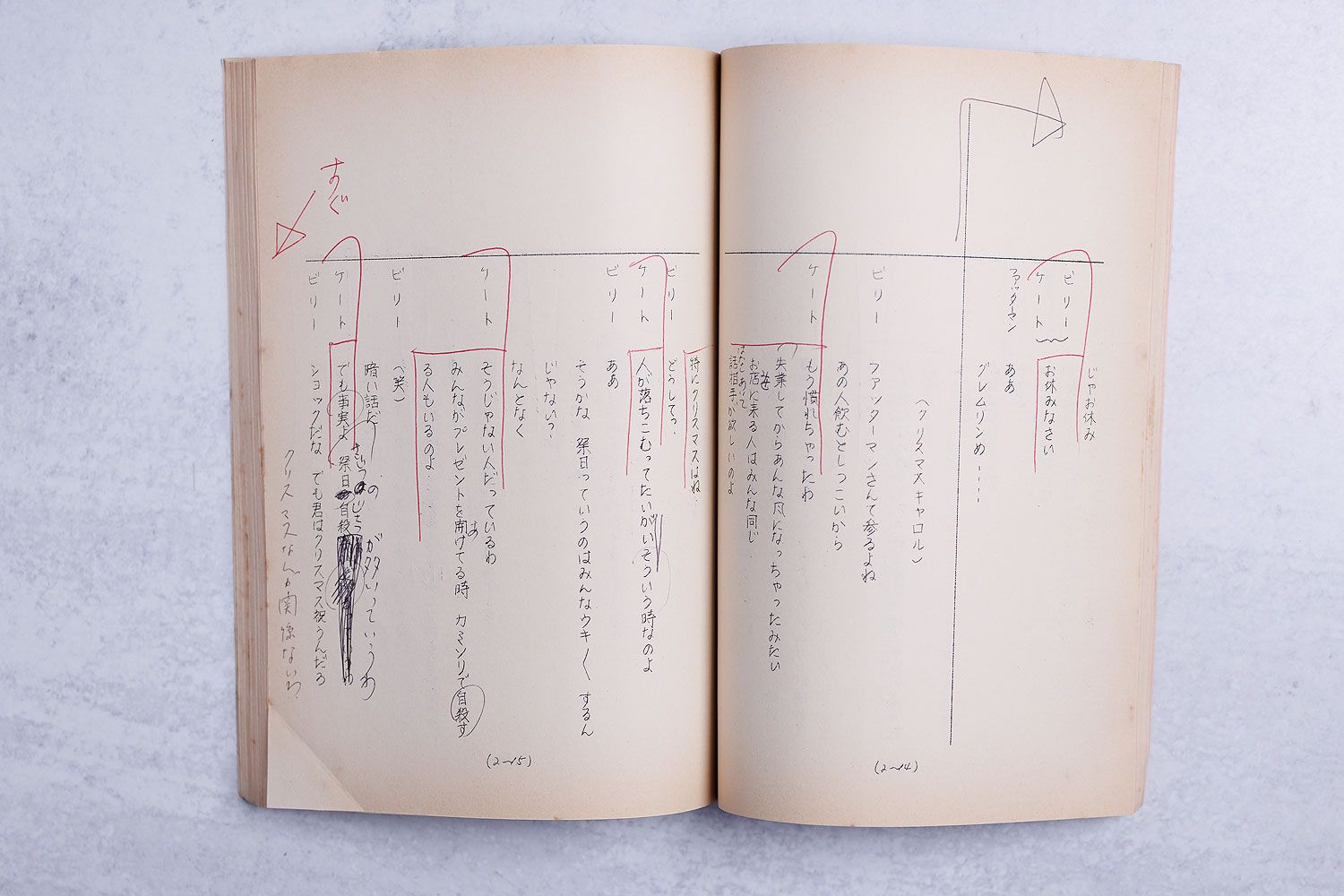
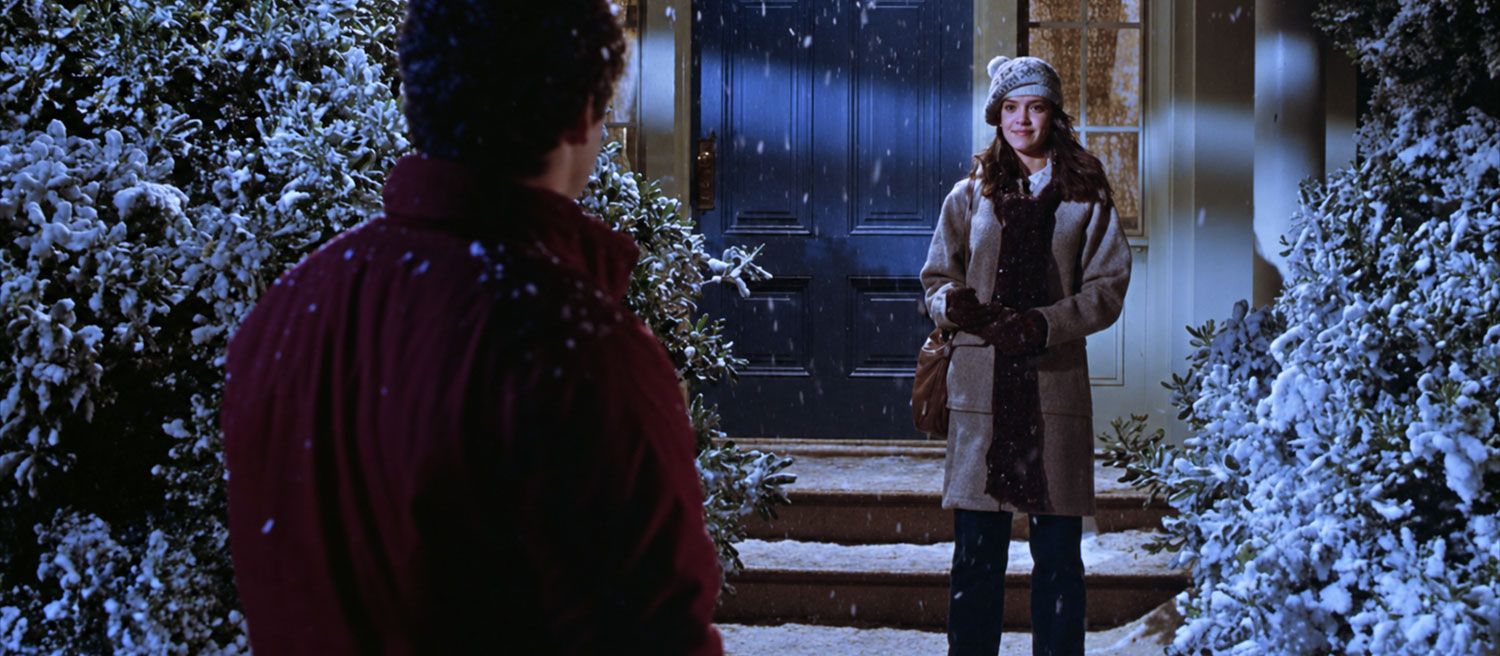
These pages cover the scene where Billy walks Kate home after Mr. Futterman leaves the bar. The text reads from right to left (Page 2-14 is the right page, Page 2-15 is the left page).
Right Page (Page 2-14)
BILLY: Well, goodnight.
KATE: Goodnight.
FUTTERMAN: Damn Gremlins... (Note: Sound cue written below: "Christmas Carol")
BILLY: Mr. Futterman is really a handful. He gets so persistent when he drinks.
KATE: I've gotten used to it. He seems to have turned out that way after losing his job. Everyone who comes to the pub is the same. They just want someone to talk to.
Left Page (Page 2-15)
Top Handwritten Note: "Immediately" (indicated by the arrow)
BILLY: Especially at Christmas.
KATE: It's a time when people get depressed. (Note: Handwritten edit changes "painful" to "depressed")
BILLY: Why? I don't know... Doesn't everyone get excited for the holidays? (Note: "Nantonaku" / "Kind of" is written next to this line)
KATE: There are people who aren't like that. While everyone else is opening presents, there are people who commit suicide with a razor... (Note: "Suicide" is circled)
BILLY: (Laughs)
KATE: (Heavily edited section) Original text (Crossed out): That's a dark story. Handwritten insertion: They say suicides are common on holidays. Active text: But it's a fact.
BILLY: That’s shocking. But you celebrate Christmas, right?
Handwritten Note (Bottom Left):
KATE: Christmas has nothing to do with it.
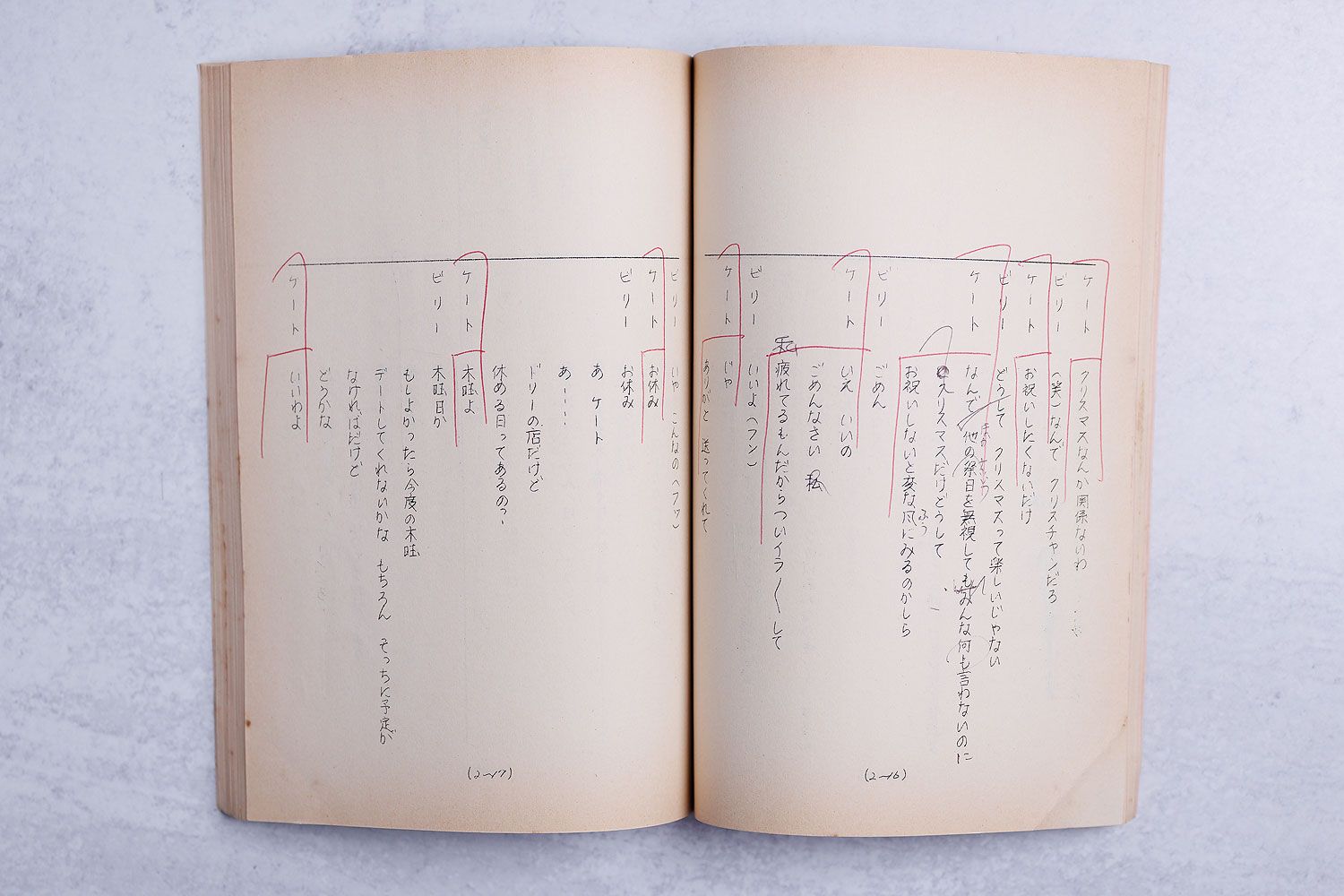
Right Page (Page 2-16)
KATE: Christmas has nothing to do with it.
BILLY: (Laughs) Why? You're a Christian, aren't you?
KATE: I just don't want to celebrate it.
BILLY: Why? Christmas is fun, isn't it?
KATE: Why is it that everyone ignores other holidays without saying a word, [but regarding this one] I wonder why they look at you so strangely [if you don't celebrate]? (Note: There are handwritten edits here changing the phrasing to express frustration about how society judges people who don't celebrate Christmas).
BILLY: Sorry.
KATE: No, it's fine. I'm sorry. I... I'm just tired, so I ended up getting irritable.
BILLY: It's okay. (Hmph/Chuckles)
KATE: Well then. Thanks for walking me home.
Left Page (Page 2-17)
BILLY: No, it was nothing. (Breath/Chuckles)
KATE: Goodnight.
BILLY: Goodnight. Ah... Kate.
KATE: Oh...?
BILLY: About Dorry's place... Do you have a day off?
KATE: Thursday. (Note: The kanji for Thursday is typed with a typo/variant "木旺日" instead of the standard "木曜日", but it means Thursday).
BILLY: Thursday, huh. If you'd like, this coming Thursday... I wonder if you'd go on a date with me? Of course, only if you don't have plans...
KATE: I wonder... Sure, that sounds good.
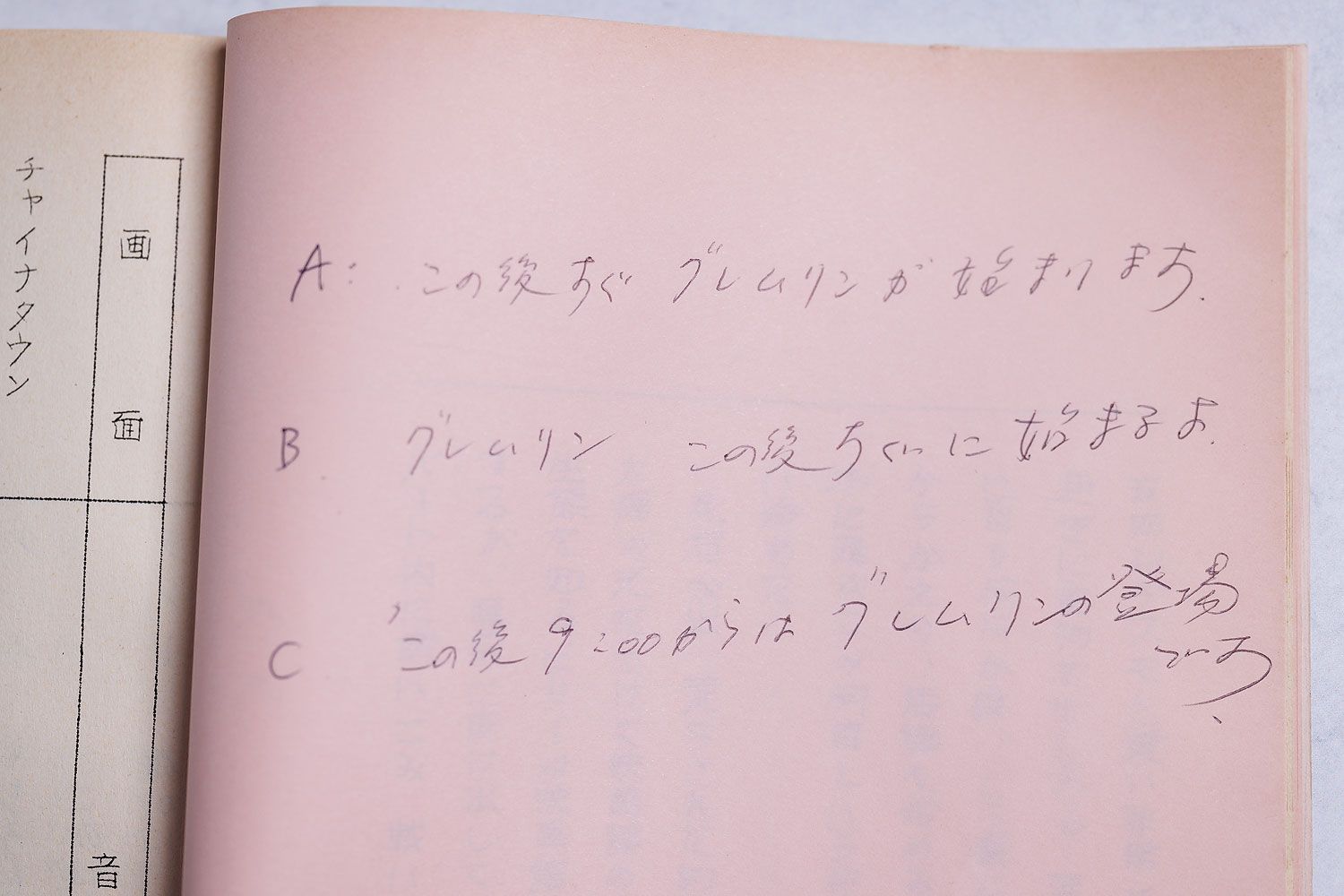
Handwritten Text:
- A:
- Japanese: A: この後すぐ グレムリンが始まります。
- Translation: "Gremlins will begin right after this."
- Note: This is written in a standard, polite tone.
- B:
- Japanese: B グレムリン この後すぐに始まるよ。
- Translation: "Gremlins is starting right after this!"
- Note: This is written in a casual, friendly tone.
- C:
- Japanese: C この後9:00からは グレムリンの登場です。
- Translation: "Coming up after this at 9:00, Gremlins makes its appearance."
- Note: "Toujou" (登場) means entry on stage or appearance.