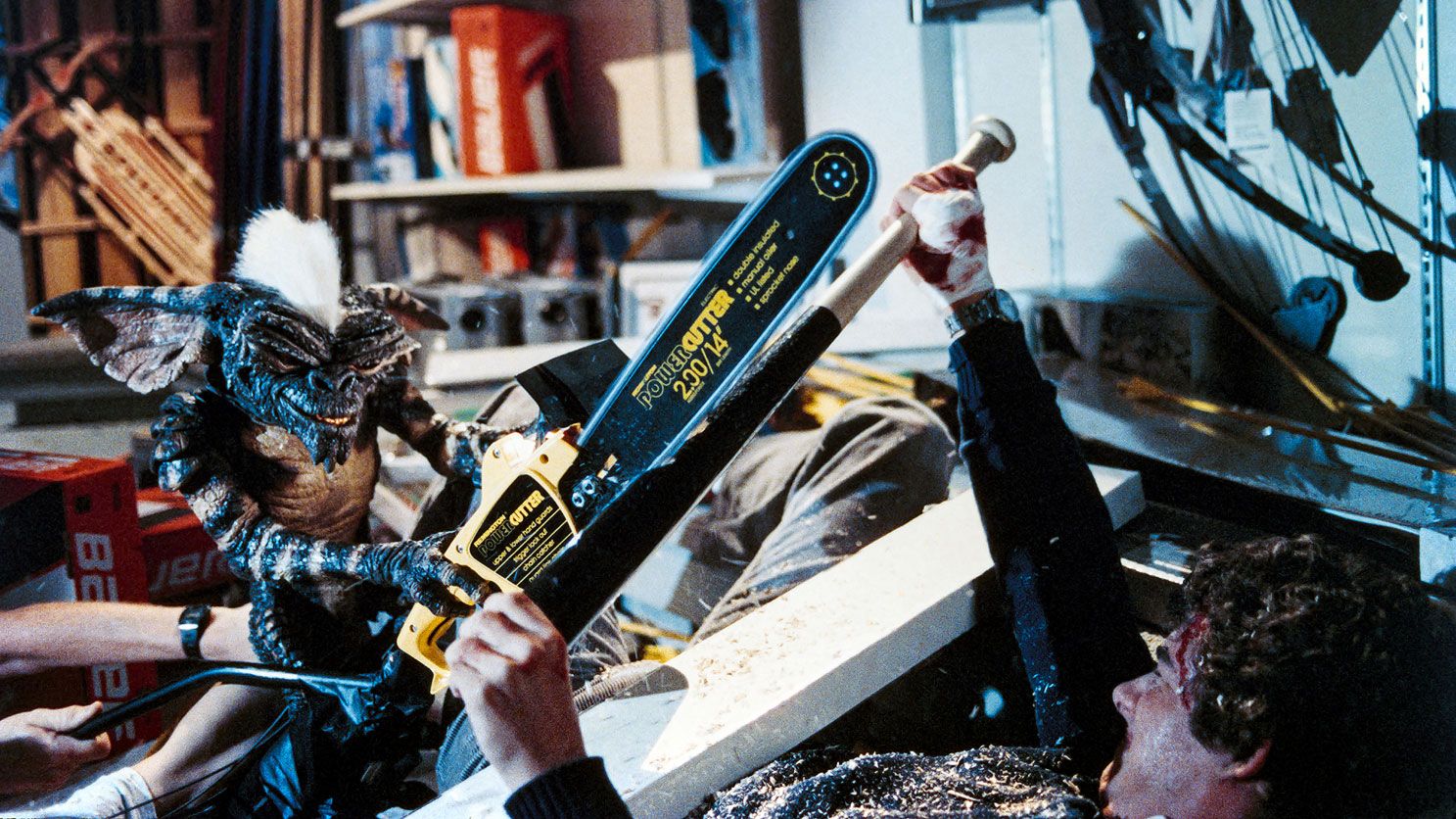
The Chainsaw Showdown: Stripe vs. Billy
How a spontaneous on-set idea turned into one of the most dangerous & unforgettable moments in GremlinS FILM LORE
Introduction
After the Gremlins’ chaotic movie-theater massacre reaches its explosive end, Stripe narrowly escapes the blast—his silhouette darting through the smoke and into the quiet, fluorescent-lit aisles of the neighboring Montgomery Ward store. It’s here that Gremlins pivots from creature comedy into a full-on horror-action finale, as Billy Peltzer tracks the lone surviving monster through the maze of merchandise.
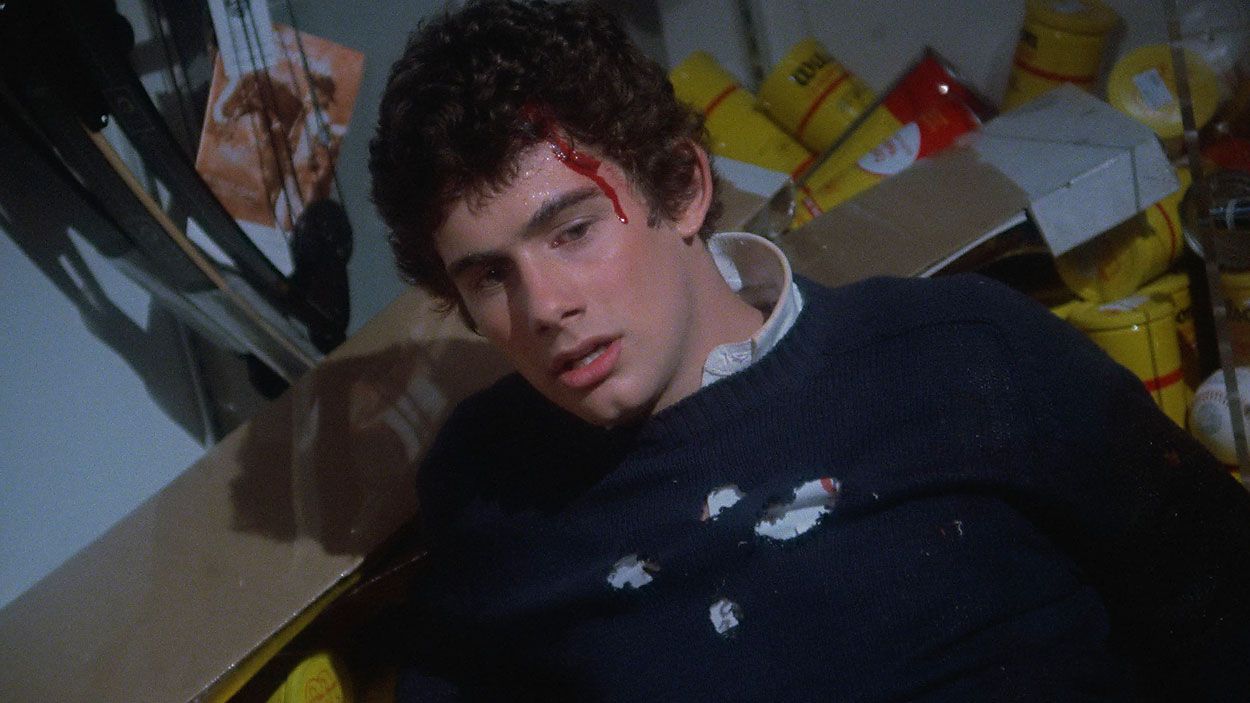
At first, Stripe toys with his prey, hiding among department displays, his wicked grin flashing between rows of stuffed animals and flickering televisions. But what begins as a cat-and-mouse pursuit quickly escalates into a duel of escalating weaponry. Billy wields a baseball bat for protection, while Stripe discovers the hardware section, gleefully launching spinning saw blades that bury themselves in the wall inches from Billy’s head. The gremlin then makes his getaway on a child’s tricycle, only to resurface in sporting goods—pelting Billy with baseballs from a pitching machine, followed by a sudden ambush with a crossbow and a menacing growl of “Bye-bye.”
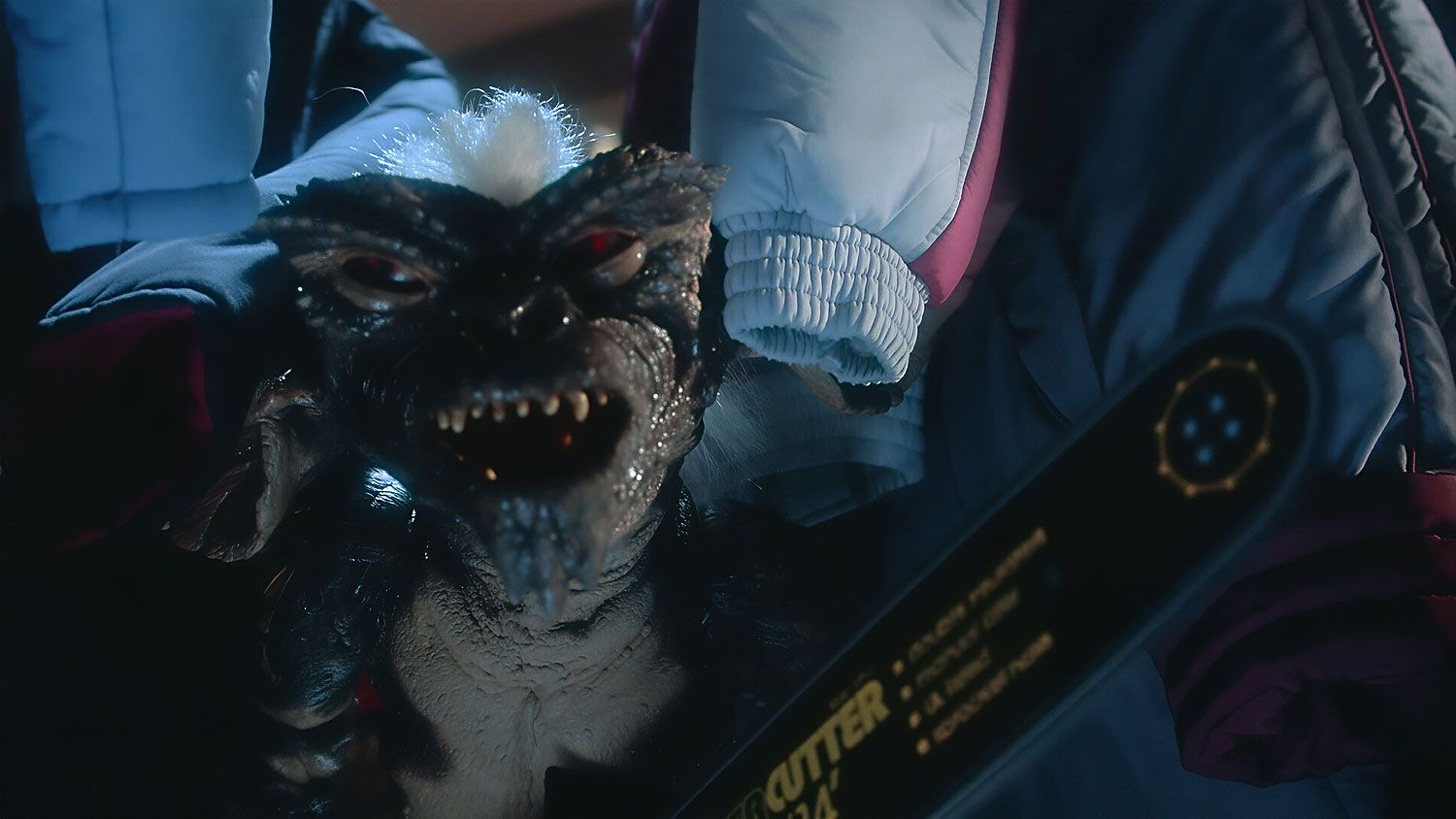
Bleeding, disoriented, and running on pure adrenaline, Billy believes for a moment that he’s survived the worst—until a new sound slices through the silence. The mechanical snarl of a chainsaw revving to life signals that Stripe’s final and most dangerous form of attack has just begun.
The Scene That Almost Wasn't
The deadly chainsaw climax almost never happened. Up until the week of filming, the Gremlins shooting script featured a very different version of the department store showdown between Billy and Stripe. After Stripe’s vicious attack with the crossbow—listed in the script simply as “bow and arrow”—the moment of impact was suddenly interrupted by a blast of shaving cream directly into the gremlin’s face.
At first, the source of the spray wasn’t clear; the script describes a sudden burst of foam disorienting Stripe mid-attack. Only when the camera pans do we see who’s responsible: Rand Peltzer, standing defiantly with his trusty Bathroom Buddy in hand. The all-in-one ineffective gadget had already been introduced in the film multiple times, so the callback would have been instantly recognizable to the audience. Seeing it finally function as intended offered a small but satisfying payoff—less comedic than a fleeting break from the mounting tension.
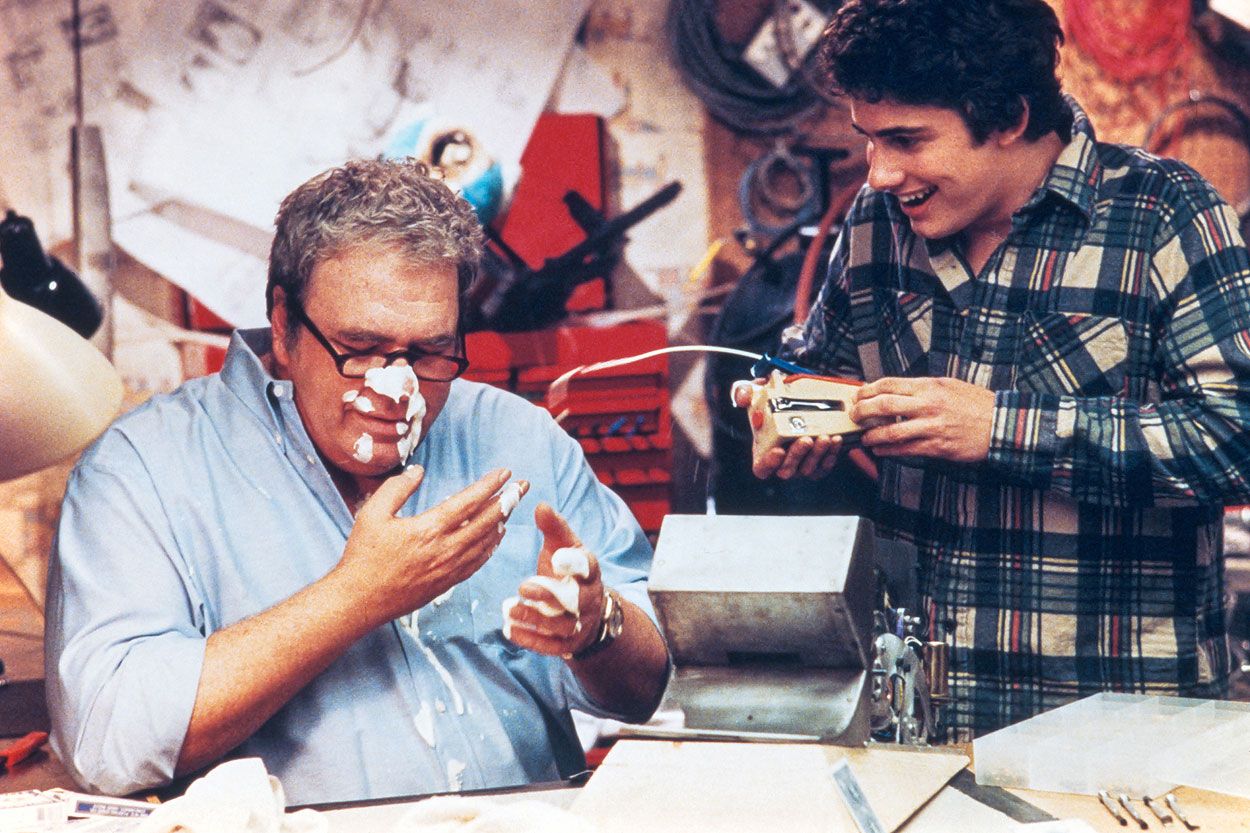
An earlier gag showing off the shaving cream function of the Peltzer Bathroom Buddy
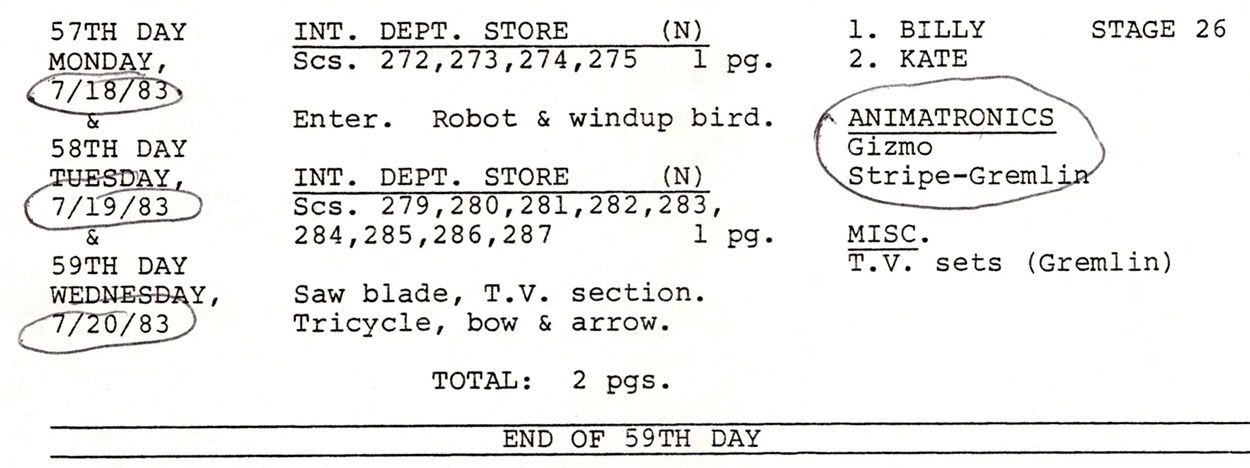
You can see in the Gremlins continuity script excerpt below where this version veers off into something completely different. The moment where Rand arrives to save the day is literally crossed out, replaced with a sequence designed to push the intensity even further. Instead of a quick rescue, Joe Dante chose escalation—turning what could have been a moment of relief into one of the film’s most dangerous and technically demanding scenes: the chainsaw attack.
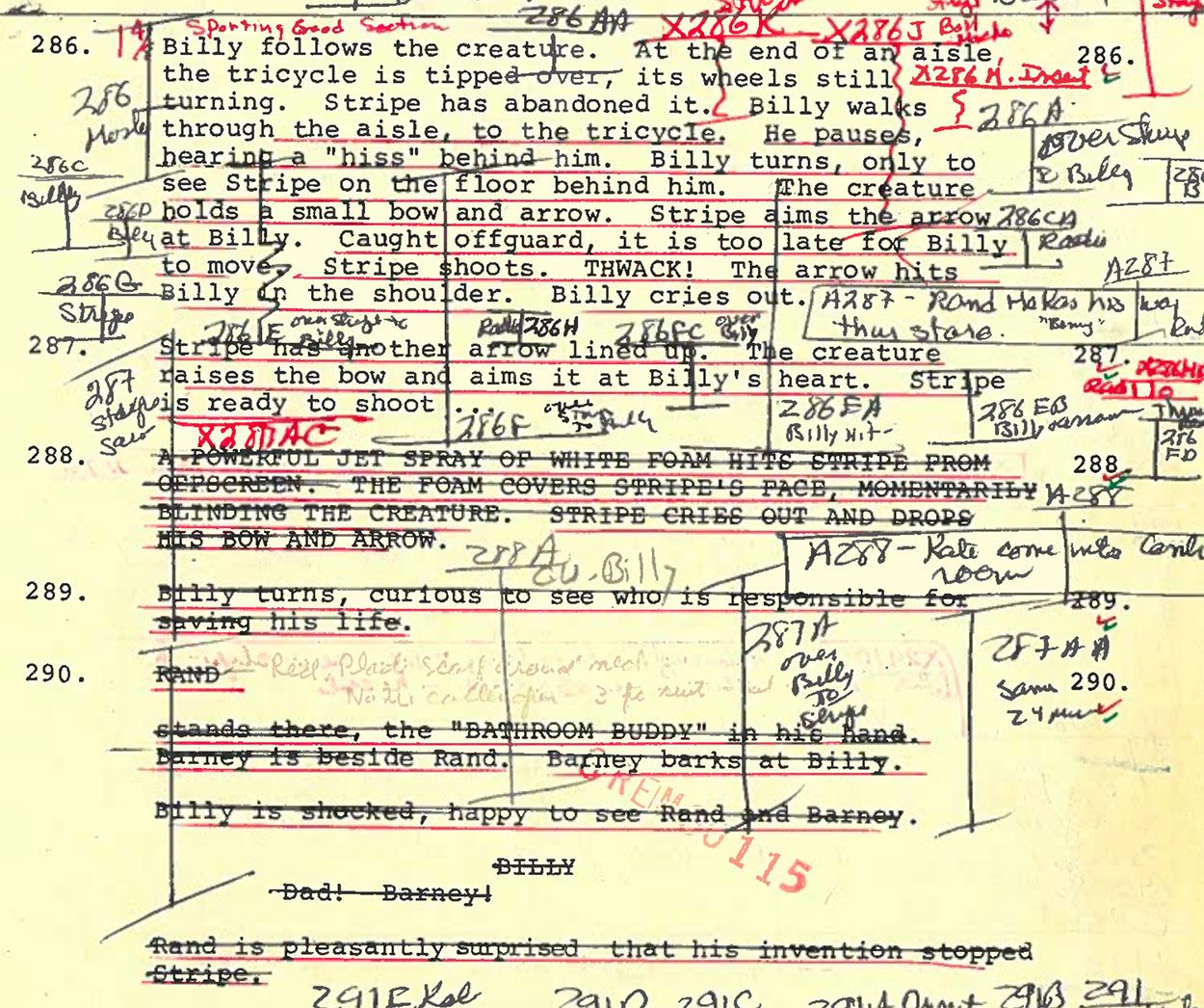
Gremlins continuity script showing what was originally the intended scene with Rand Peltzer, Billy's dad, saving the day.
The Origin
The idea for the chainsaw battle came directly from Zach Galligan and Joe Dante while filming in the department store. As they worked through the sequence, both felt that the scripted version didn’t quite push the tension far enough. Together, they came up with a way to raise the stakes and pay tribute to one of horror’s most notorious films.
“When Joe and I were walking around the department store, I noticed the chainsaw and I said, 'Is that a direct homage to Texas Chainsaw Massacre and Tobe Hooper?' And Joe replied, 'As a matter of fact, it is.' I then suggested that I fight the gremlin with the bat and the gremlin having the chainsaw. Joe thought about it for a few seconds, turned to me and said, 'Give me 5 minutes!' And he ran off to plot the scene." (Gremlins Museum, October 2025)
Galligan envisioned the fight as a frantic, close-quarters struggle—Billy ducking behind boxes and displays as Stripe came at him full force, the bat clashing against the buzzing saw in a shower of sawdust. “Then the bat can get sawed in half, and there will be a question as to whether or not Billy will make it,” he said. (Starlog #92, March 1985)
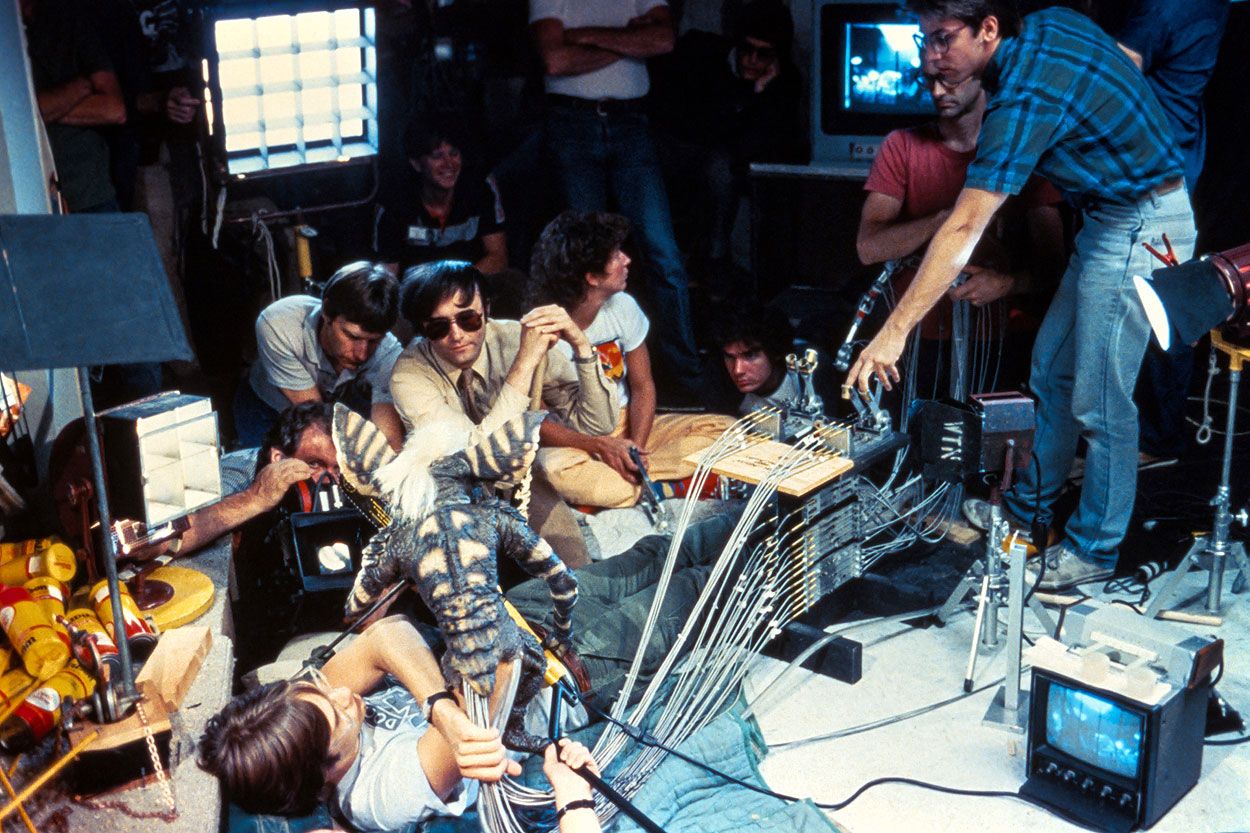
Still from the Joe Dante Slide Archive @ The Gremlins Museum
Filming the Battle
The scene took two full days to film, and while the danger looked real on-screen, the setup was carefully engineered for safety. Galligan remembered the meticulous preparation that went into controlling the live chainsaw:
“They had to drill a steel platform into the ground so that you couldn’t budge it. On top of that, they mounted another platform, where they placed the chainsaw. Finally, they wrapped Stripe around the chainsaw so that the chainsaw would only move in a circumscribed area, and wouldn’t go very low, even if you stood on it. It took a while, but when they finished, I knew it was safe.” (Starlog #92, March 1985)

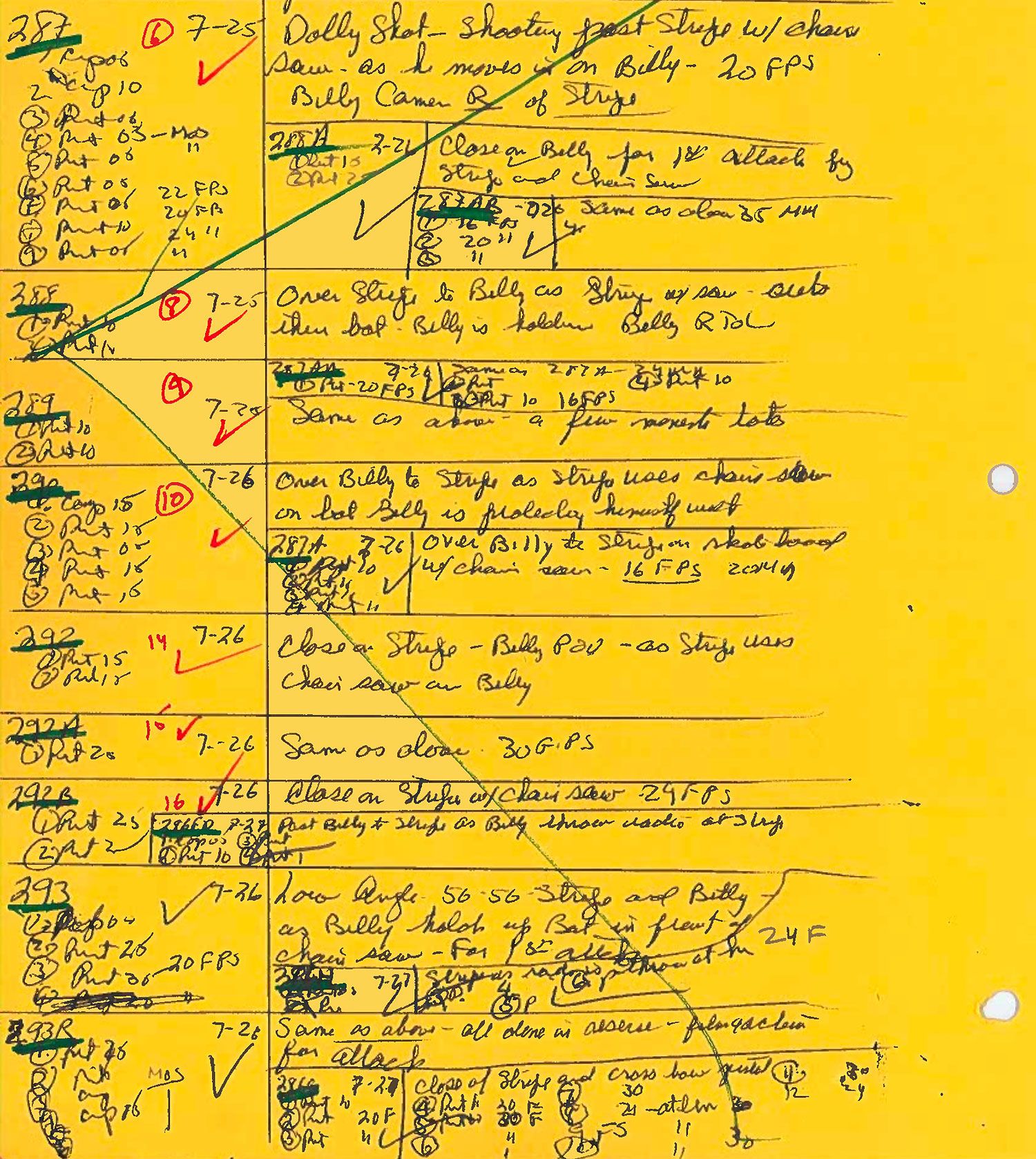
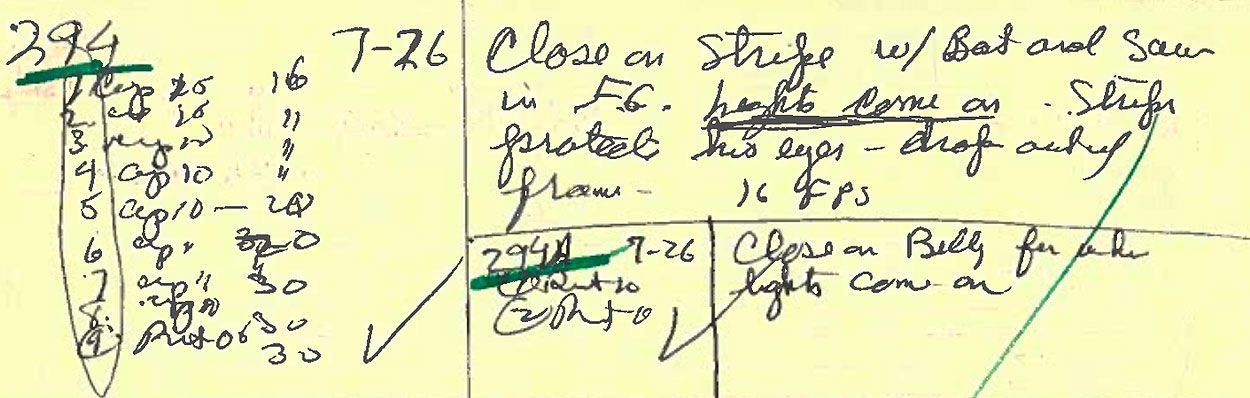
Gremlins continuity script showing chainsaw scenes as they were shot for the final movie.
Creature-effects supervisor Chris Walas described how the puppet team translated that setup into a believable on-screen assault:
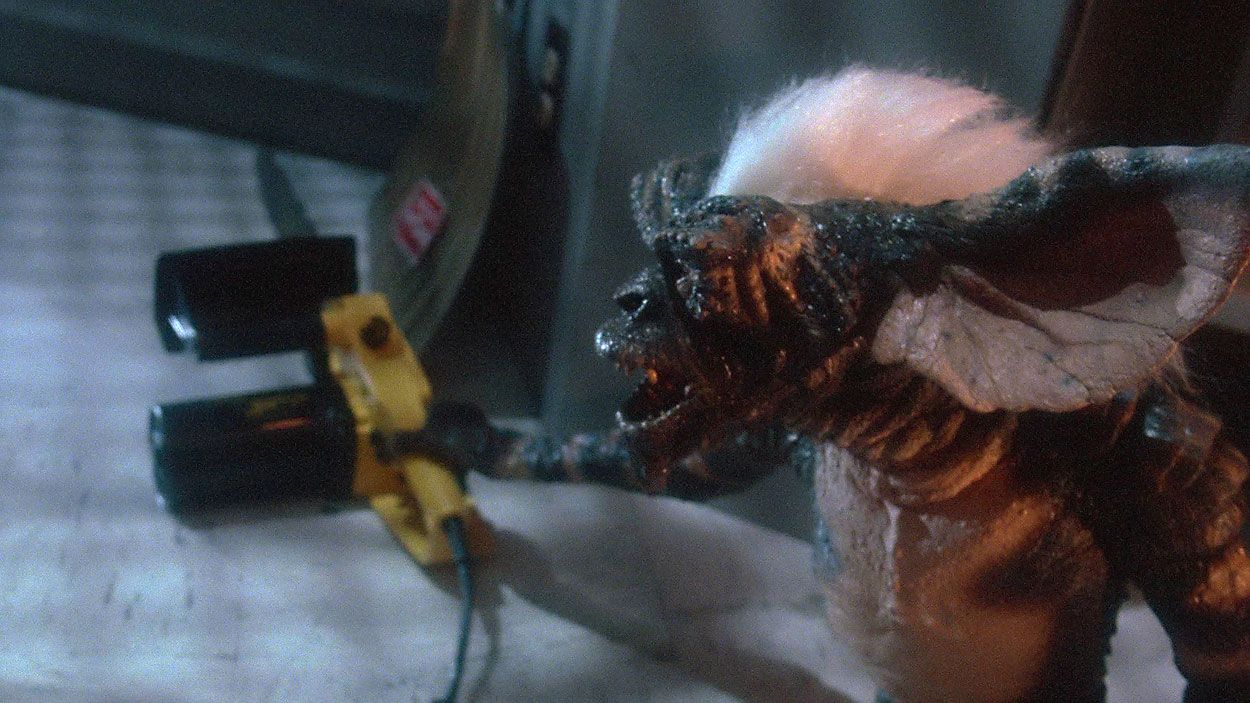
“The chainsaw was real—and wired to a Stripe hand-puppet’s arms so that he could really hold onto it,” Walas explained. “For the waist-up shots, the puppeteer could lay on a forward-protruding platform just out of frame. Bob MacDonald built a jointed metal rig on the end of the saw that allowed me, as the puppeteer, to flail wildly but never get closer than a certain point. It was a guaranteed stopping point; I literally couldn’t get any closer to Billy. Bob was very safety-conscious throughout the show.” (Cinefex 19, November 1984)
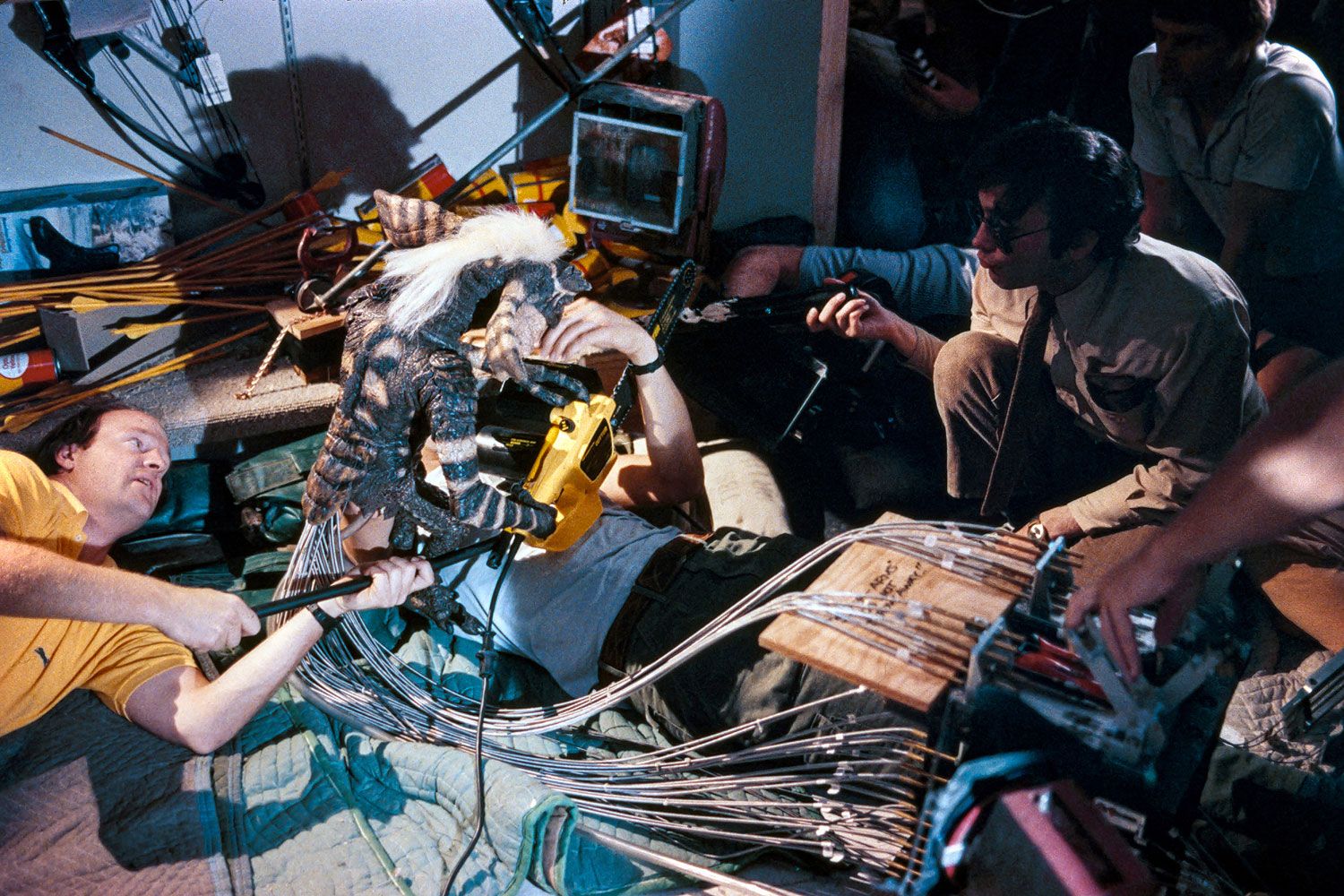
Still from the Joe Dante Slide Archive @ The Gremlins Museum
In a recent interview conducted by the Gremlins Museum, Chris shared additional insight into how the production kept the dangerous sequence under control while still maintaining the illusion of chaos on screen.
“It was a regular chainsaw with the blades removed from the chain, and the baseball bat was balsa wood. The chainsaw was on a limiting support so that Bob MacDonald Jr. (yellow shirt in the photo) actually operated the chainsaw. Both Zach and I acted against whatever Bob was doing. It was a little intimidating, to be sure, but Bob did a great job keeping it safe.” (Gremlins Museum, October 2025)
Even with those precautions, Zach Galligan admitted that the intensity of the moment wasn’t lost on him during filming:
“It was hard to ignore the danger of losing a finger, since a real blade was necessary to cut into the bat,” he said, adding with a laugh, “No cue system, but I was strongly advised not to move my hands to either the right or the left.” (Gremlins Museum, October 2025)
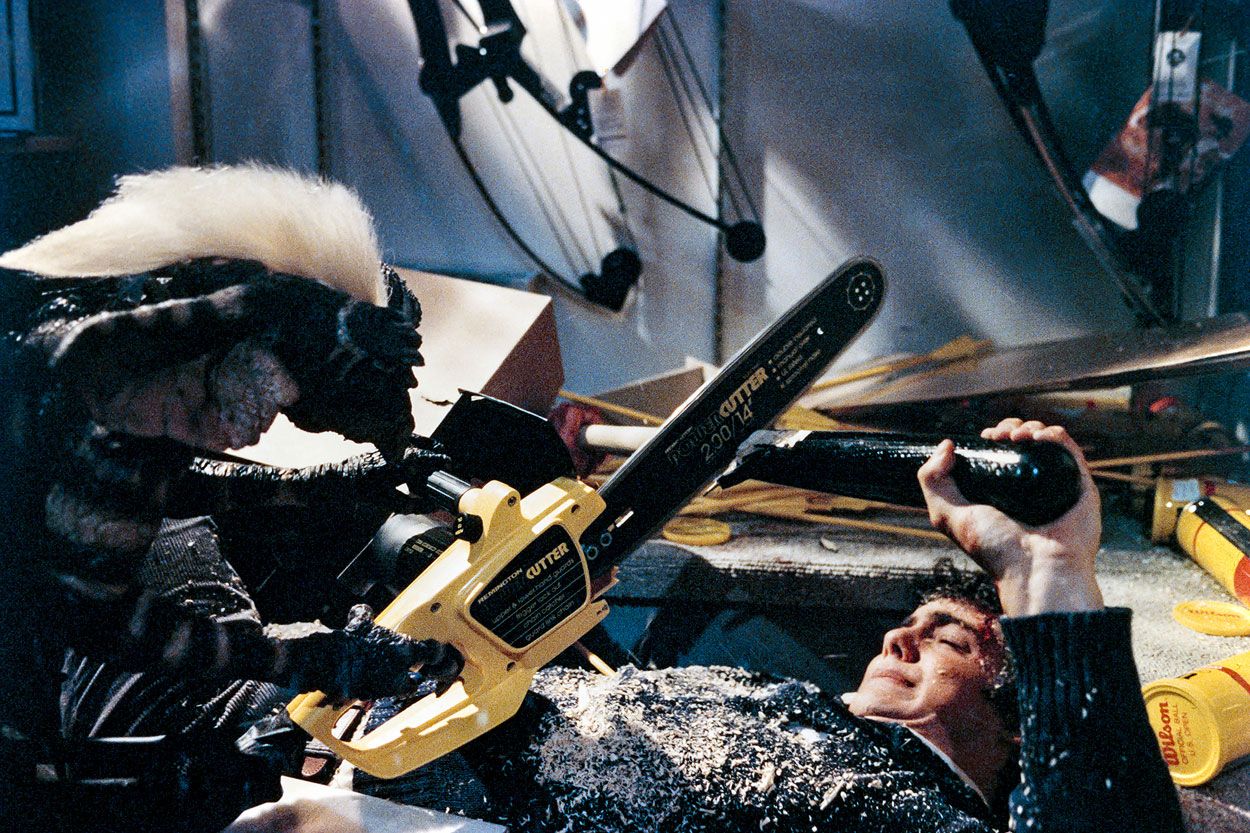
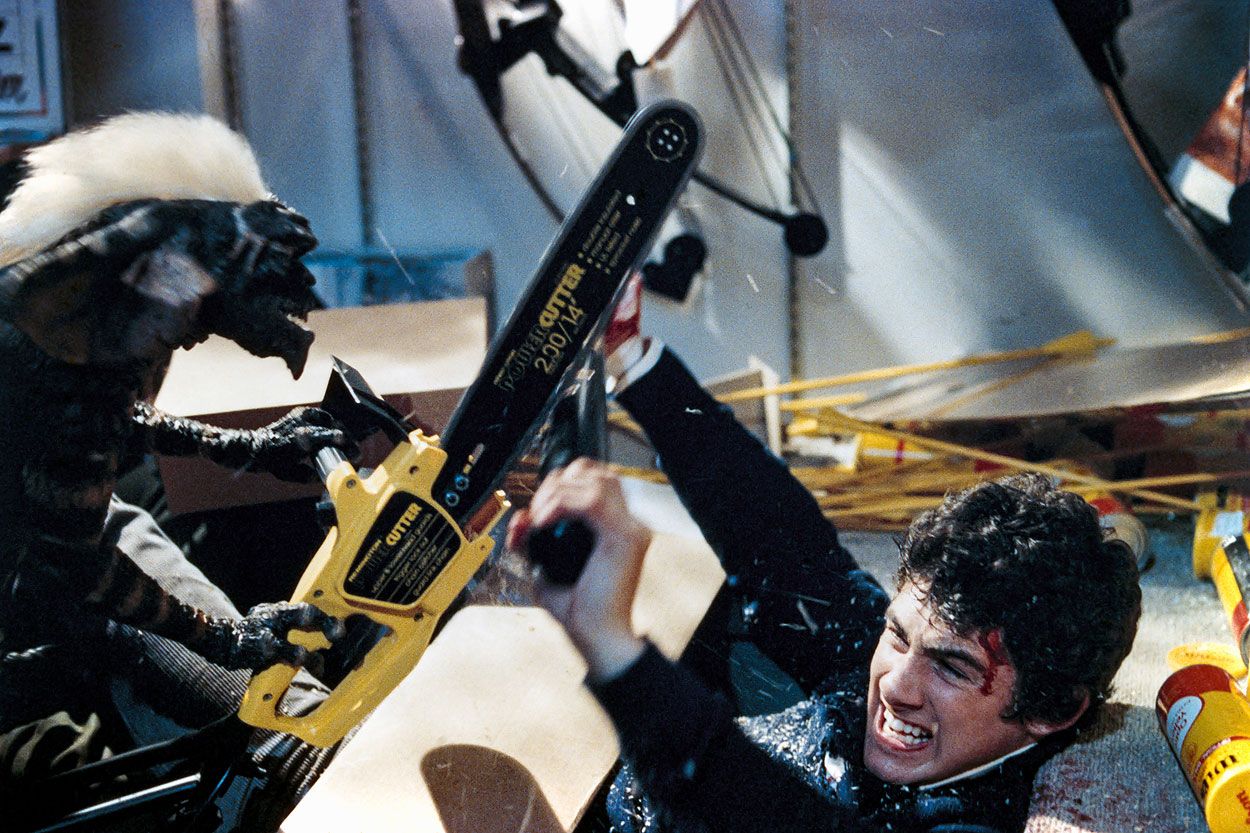
Stills from the Joe Dante Slide Archive @ The Gremlins Museum
"Instruments of Violence"
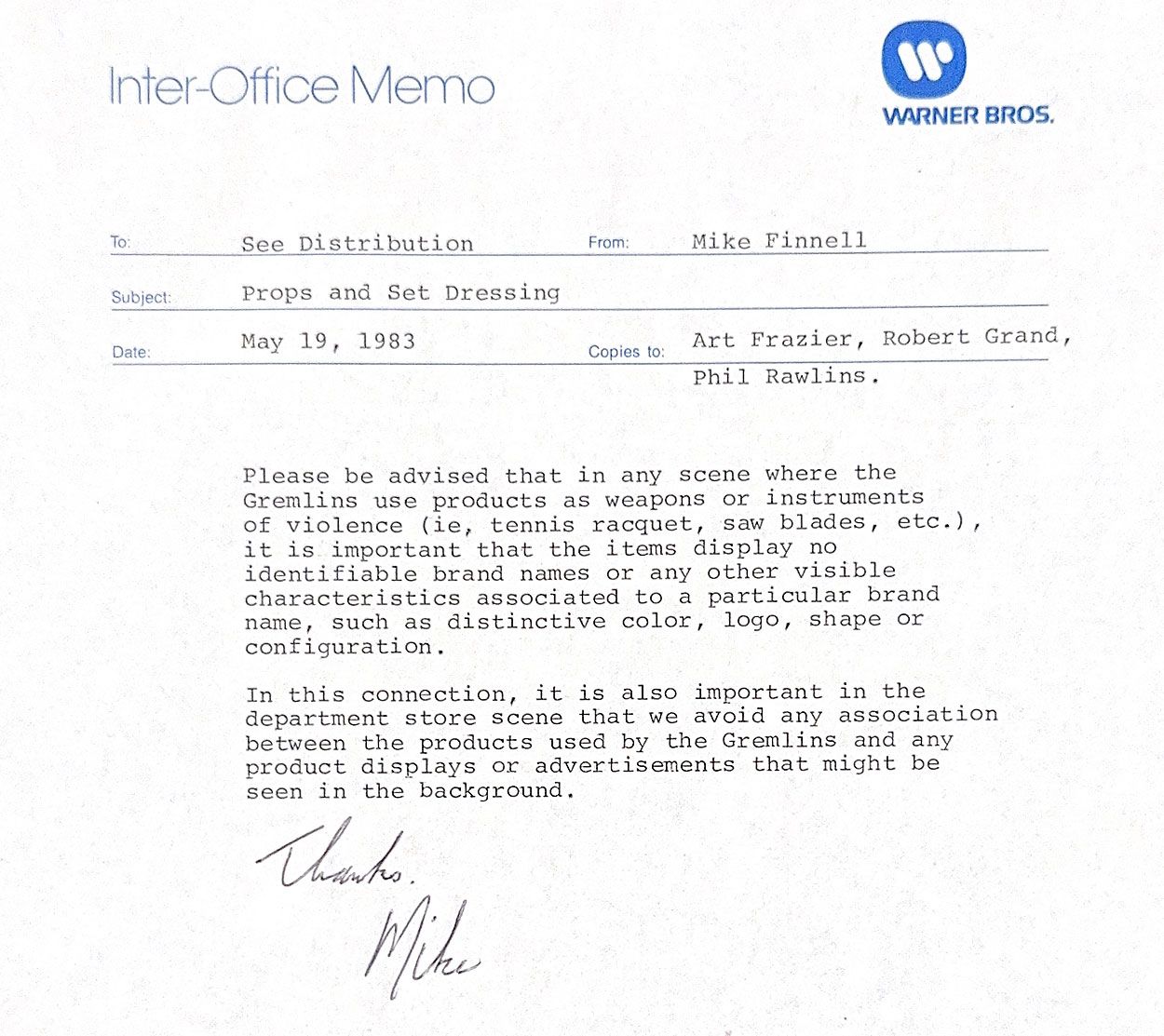
Adding to the behind-the-scenes precautions, a Warner Bros. inter-office memo dated May 19, 1983, issued by producer Mike Finnell, reveals that the studio was also mindful of another kind of danger—brand liability. The note instructed the props and set dressing departments to ensure that any products used by gremlins as weapons—such as “tennis racquets, saw blades, etc.”—showed no identifiable brand names, logos, or recognizable designs. This guideline was particularly important for the Montgomery Ward sequence, where the gremlins’ antics unfolded among real consumer goods. The studio wanted to avoid any implication that a recognizable brand’s product was being used for violence.
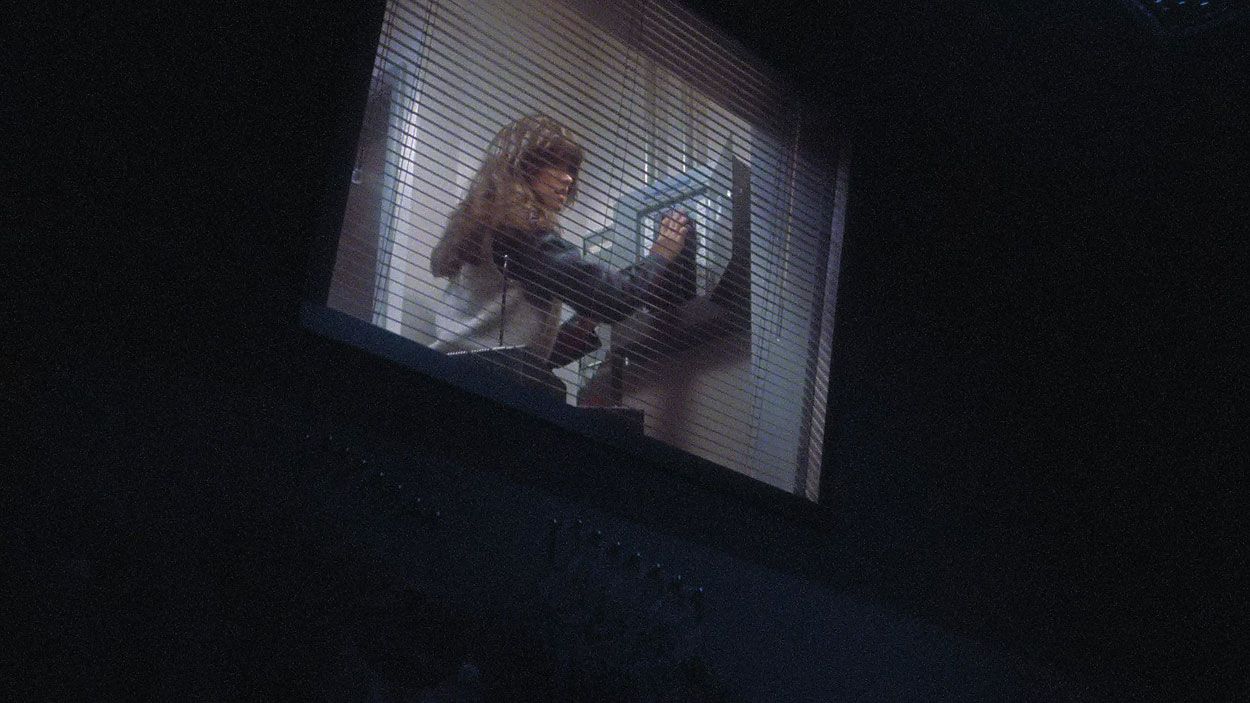
The chaos reaches its breaking point as Kate, already in the control room, frantically flips switches in the breaker box, flooding the department store with light. The sudden blaze blinds Stripe mid-attack, his focus faltering as the roaring chainsaw jerks in his hands and drags him backward across the polished tile.
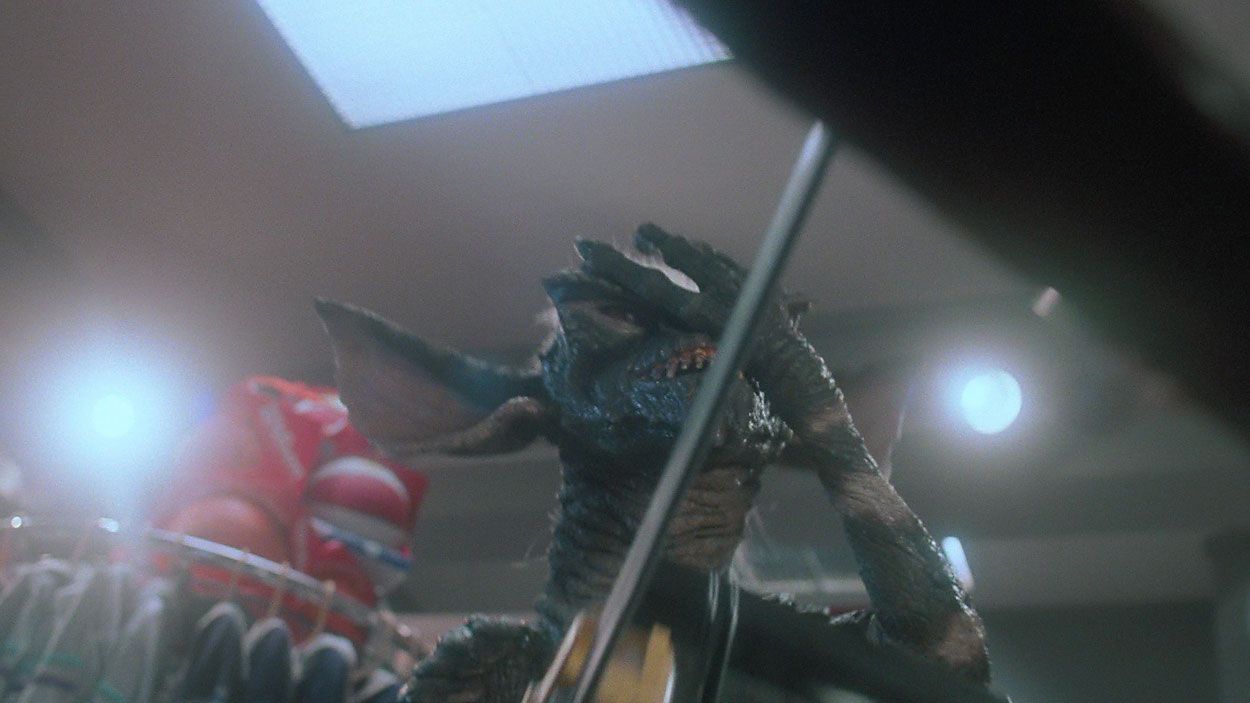
For the shot of Stripe being pulled across the room, a radio-controlled puppet took over, with the chainsaw’s blades ground completely flat to mitigate any danger. Still, if you look closely, you can actually see the marks the chainsaw leaves behind as it scrapes across the floor.
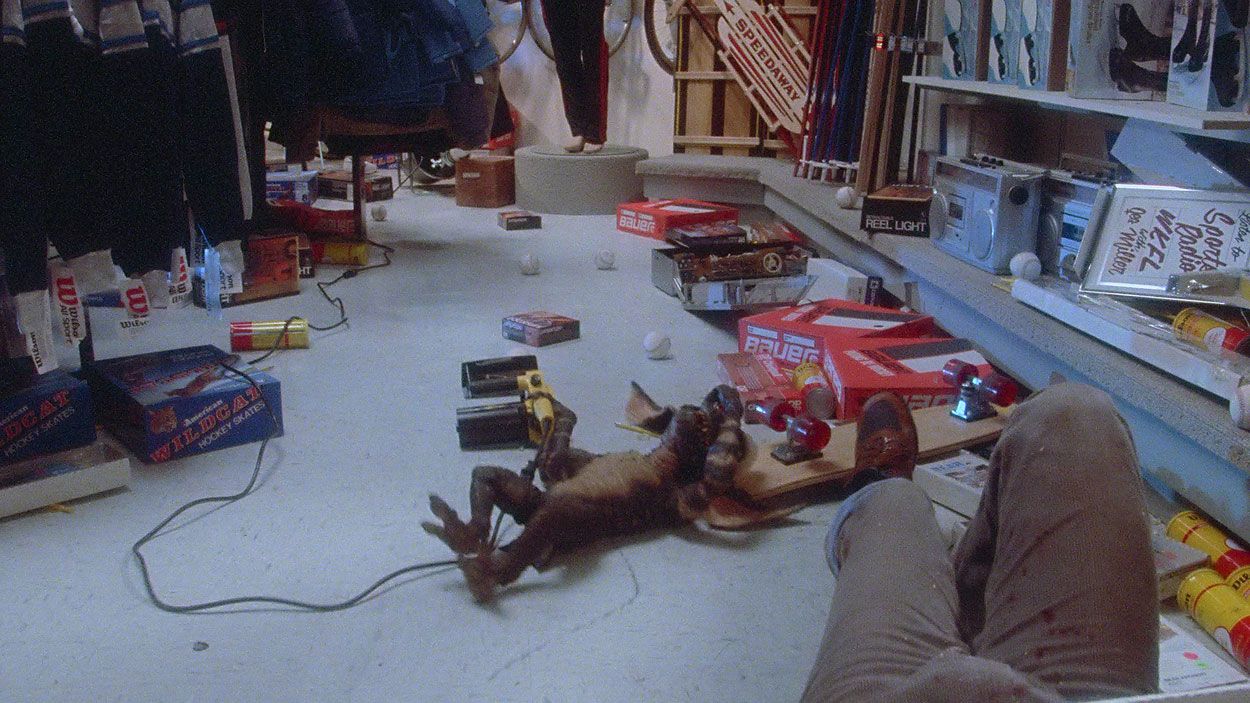
As the creature tumbles and ends with his head against the wall, a familiar bird-chirping sound effect cuts through the noise—a tongue-in-cheek bird chirp cue from the Warner Bros. sound library. Director Joe Dante later recalled the debate around including it:
“That’s probably one of the most blatantly cartoonish noises in the entire show,” Dante said. “Steven kept saying, ‘I don’t know, do you think that’s a little much?’ And I’d say, ‘Oh, come on. I mean, the picture’s almost over!’” (Starlog #92, March 1985)
After two days of chaos, sweat, and chainsaw noise, the scene ends with a wink of comedy—but only lets the audience breathe for a moment, as Stripe quickly locates a revolver and heads toward the Garden Center for the film’s explosive finale.
Conclusion
The department store showdown perfectly encapsulates what makes Gremlins endure: a seamless fusion of handcrafted effects, on-the-fly creativity, and fearless practical filmmaking. What began as an improvised idea between Zach Galligan and Joe Dante evolved into one of the film’s most technically daring and memorable moments—equal parts tension, precision, and spectacle. Every element, from the meticulous work of Chris Walas’s effects team to the physical commitment of the actors, reflects a kind of moviemaking that thrived on ingenuity and trust.
Reflecting on it decades later, Galligan acknowledged that a scene like this would be almost impossible to film today. “It almost certainly wouldn’t be allowed due to the danger involved, not to mention the lawsuits,” he said. “We’re a thousand times more litigious now.” (Gremlins Museum, October 2025)
That sense of unfiltered creativity and risk-taking is exactly what defines the spirit of Gremlins—and why the chainsaw showdown remains one of the most unforgettable sequences in 1980s cinema.
Special thanks to Aelia Petro for her incredible article library and Zach Galligan and Chris Walas for sharing their memories for this project.