Anarchy in the Projection Booth:
Deconstructing the Gremlins 2 Film Break
Introduction
When Gremlins 2: The New Batch hit theaters in June 1990, audiences expected a return to Kingston Falls—a familiar dose of small-town chaos, jump-scares, and slimy little monsters wreaking havoc. In the pre-internet era, before teaser clips and spoiler-filled YouTube breakdowns, most moviegoers went in with no background knowledge, anticipating more of what made Gremlins a cultural phenomenon.
Instead, they got something altogether different: the most meta studio film ever made. Free of studio interference and gleefully self-aware, Gremlins 2 was Joe Dante unleashed—a sequel that didn’t just parody Hollywood sequels, but its own existence. It was anarchic, absurd, and relentlessly self-referential.
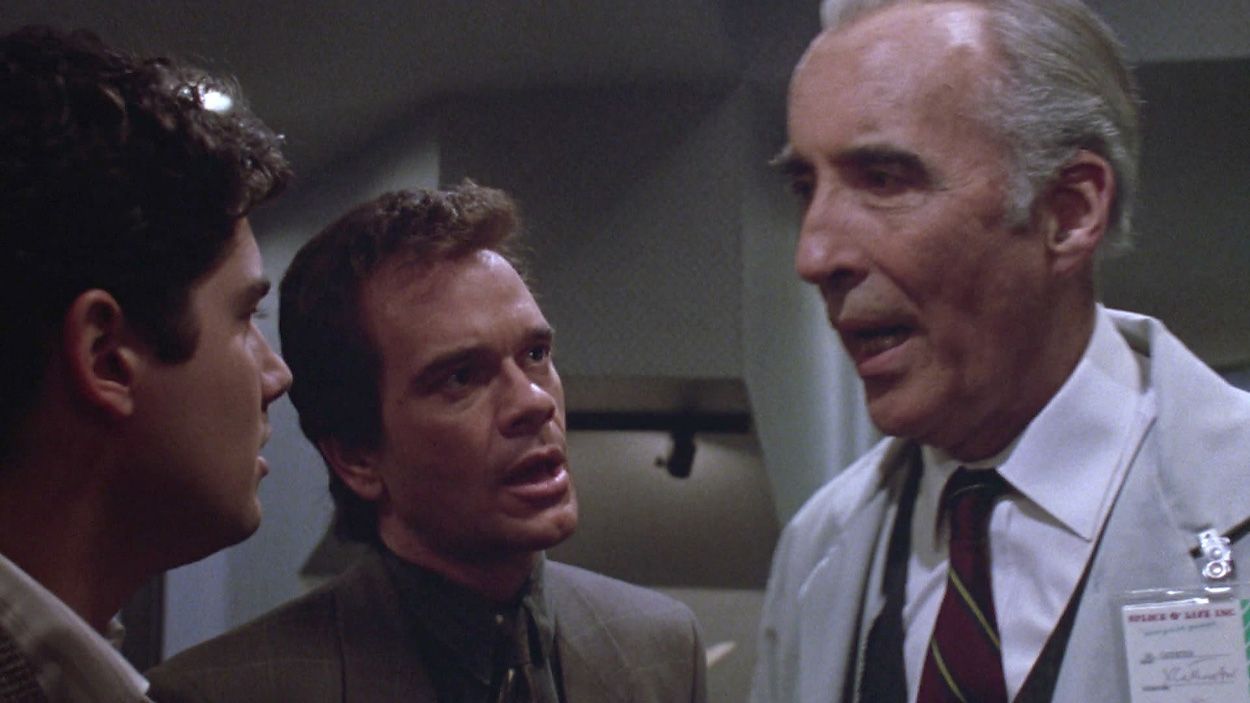
Nowhere was this more evident than just over an hour into the picture. The Gremlins have raided the Splice o’ Life laboratory, gulped down every serum in sight, and transformed into a mutant menagerie overrunning Clamp Center. As Kate triggers the fire alarm to evacuate, Billy, Dr. Catheter, and Forster rush into a hallway swarming with panicked people—and a few misplaced barn animals—when suddenly, reality begins to unravel.
Their voices distort. The frame warps. The image stretches. And then, with a sputtering whirr, the film itself appears to melt. For anyone in the audience that night (projectionists particularly), it was a nightmare moment: did the print actually break?
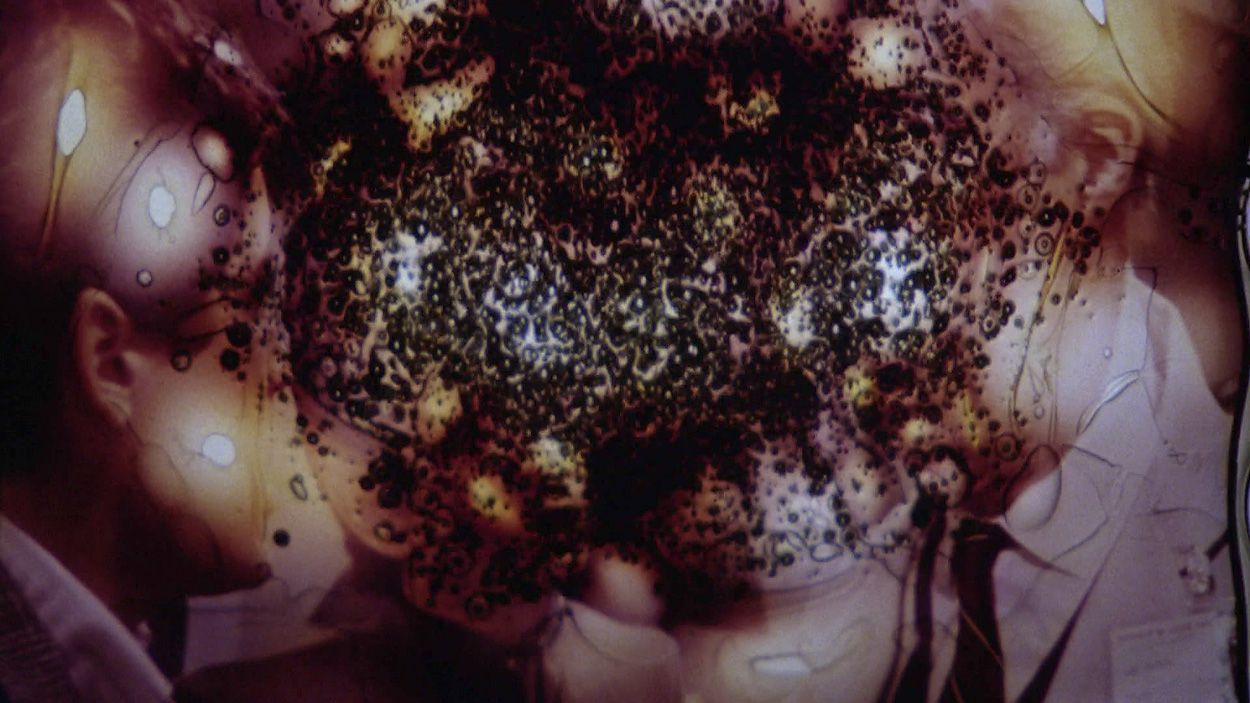
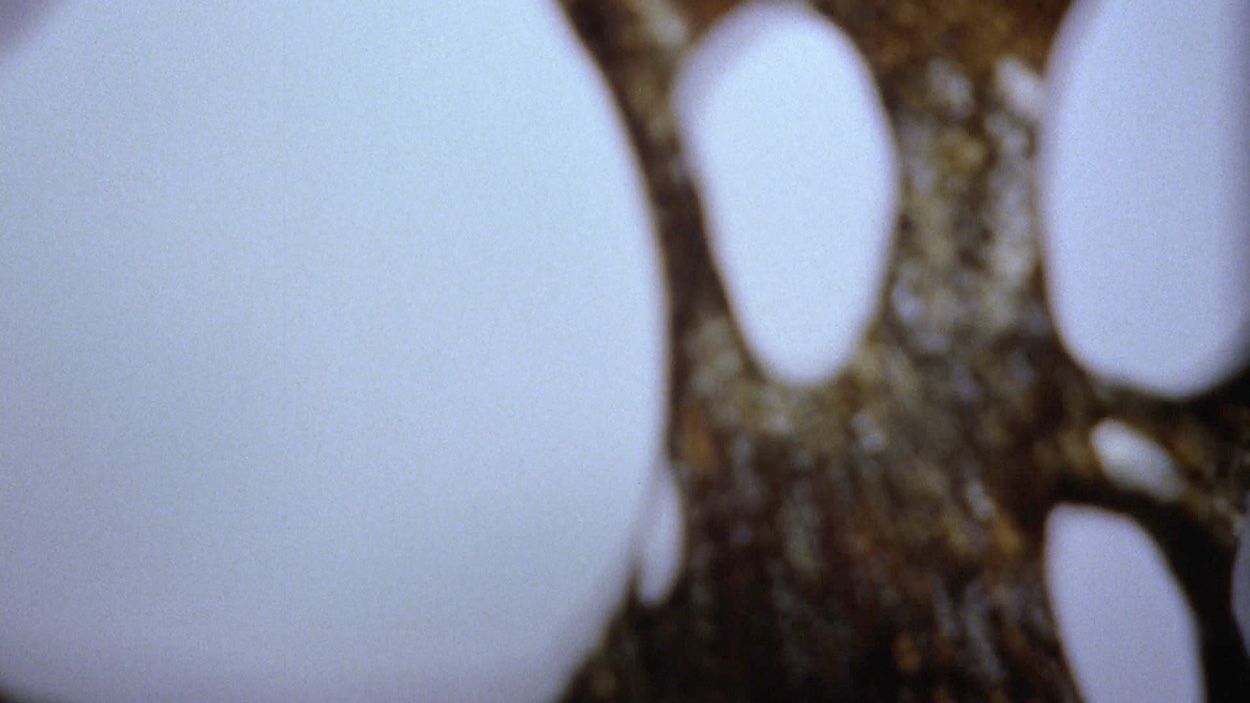
The screen blazes white—and then the silhouettes appear. Gremlins, triumphant, have seized control of the projector! They cackle, performing shadow puppets—a bird, a bunny, even Abraham Lincoln. The joke lands like a thunderclap: the Gremlins have hijacked the movie itself. It’s a gag so bold, so gleefully crazy, that no major studio would have ever approved it—except this time, they had no choice.
The Origin
Director Joe Dante conceived the infamous Gremlins 2 “film break” sequence as a sly homage to the theatrical trickery of old-school horror showmen. Chief among his inspirations was William Castle’s The Tingler (1959), which famously staged a faux film break and addressed the audience directly as the monster “escaped” into the theater. Dante wanted to recreate that same interactive thrill, but filtered through the chaotic lens of his own movie monsters. This time, the gremlins themselves would invade the real world, gleefully hijacking the audience’s experience from inside the projection booth. It was a prank so audacious, it bordered on cinematic sabotage—utterly fitting for a sequel already thumbing its nose at convention.
“One of my favorite movies is Hellzapoppin, which is a movie where they break the fourth wall constantly. And I was also a big fan of Warner Brothers cartoons, which do the same thing. And I thought if I could get that kind of sensibility into this movie, and have the Gremlins seem like they’re taking over the movie, maybe even taking over the movie theater that you’re watching it in, then it would have a sort of interactive quality that I thought would be interesting.” (Consequence.net, 2002)
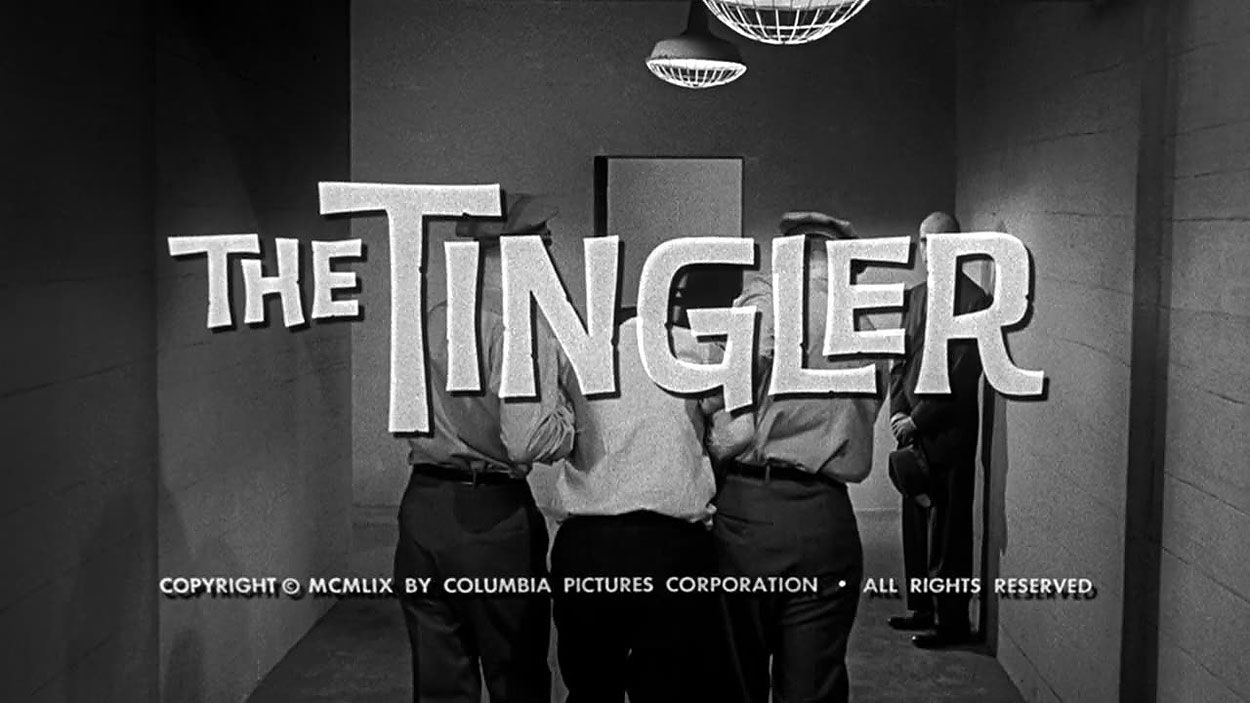
The Tingler (1959) was part of the inspiration for Joe Dante to create the infamous Gremlins 2 film break sequence.
Screenwriter Charlie Haas remembers the early conversations about adding the film break:
“I remember a meeting with Mike Finnell and Joe Dante where Joe said he’d like to have a William Castle–like gag in the picture. And Mike said, ‘But William Castle didn’t open movies in thousands of theaters.’ i.e., it wouldn’t be practical to do a physical gag like The Tingler in so many places. But we kept fooling with it, and one of us—who knows which one, probably not me—had the inspired idea of having the film appear to break.” (Gremlins Museum, November 2025)
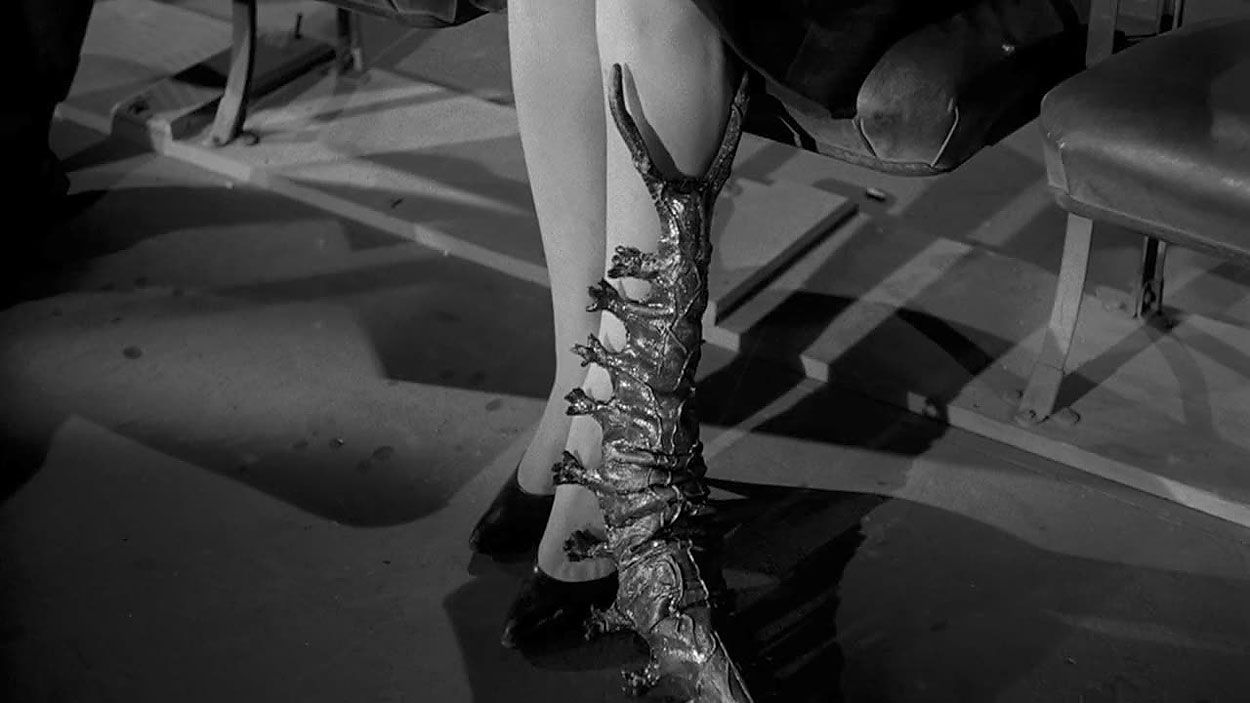
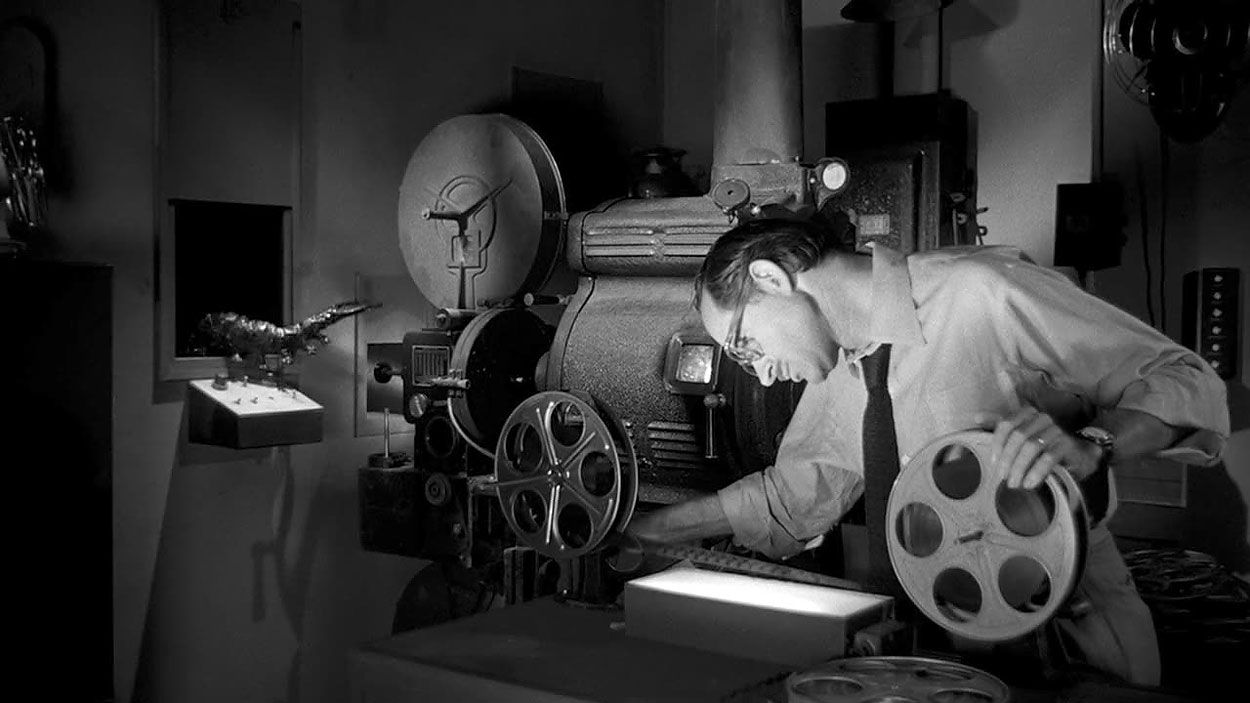
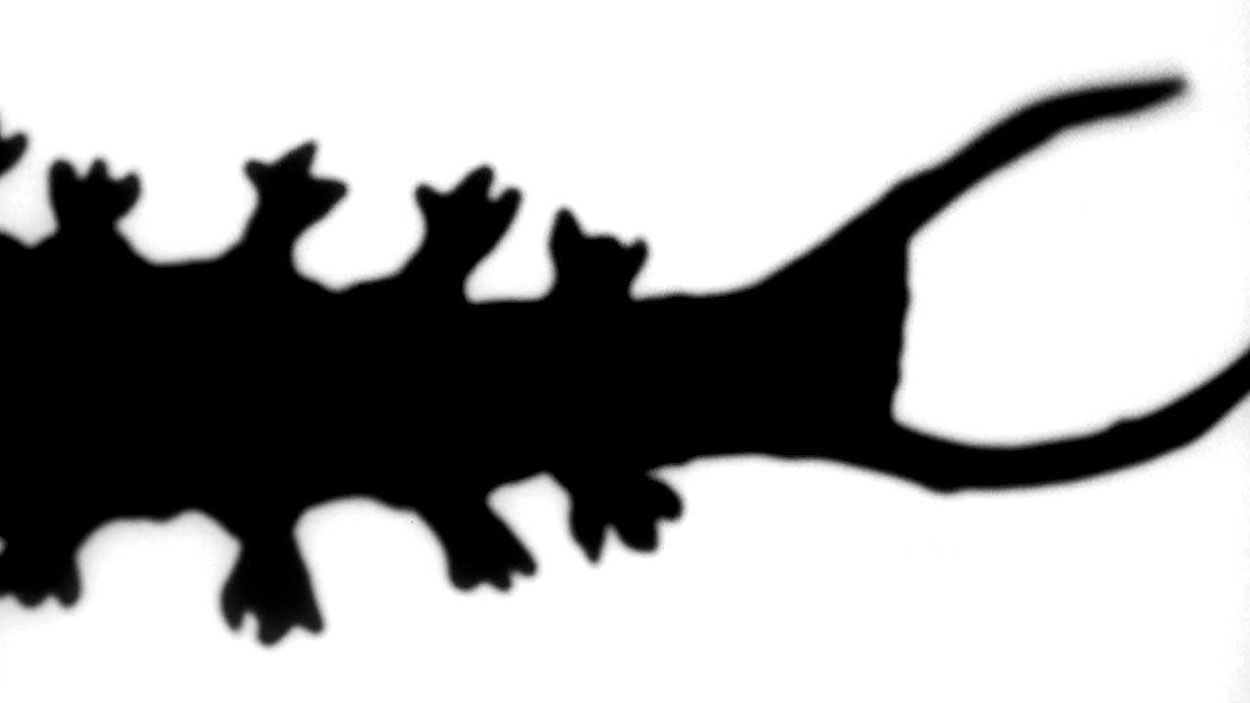
The film break sequence almost went even further. As Joe Dante later explained, his original plan involved turning the actual theaters into part of the joke.
“My original idea, which the studio didn’t go for, was that I thought if the audience thinks the gremlins are up in the projectors then they’ll turn around and look in the projection booth. And then I thought if you had cardboard cutout gremlins on springs that you could put up in the window, then they could turn and they would see gremlins in their projection booth. I thought that was a great idea but the studio just didn’t want to bother.” (Consequence.net, 2020)
Incredibly, Dante had the leverage to even pitch something that wild. Warner Bros., desperate for a Gremlins sequel, had given him what was essentially a blank check—total creative freedom. The result was one of the most subversive studio pictures ever made: a Joe Dante stream of consciousness that gleefully dismantled the very concept of sequels.
Michael Finnell recounts the promise of creative freedom made to Dante.
“They came back to me and said ‘If you give us one of those Gremlins movies next summer, we’ll let you do whatever you want—you can make any kind of movie as long as it’s got gremlins in it.’ That’s a very rare opportunity.” (SciFiNow, 2020)
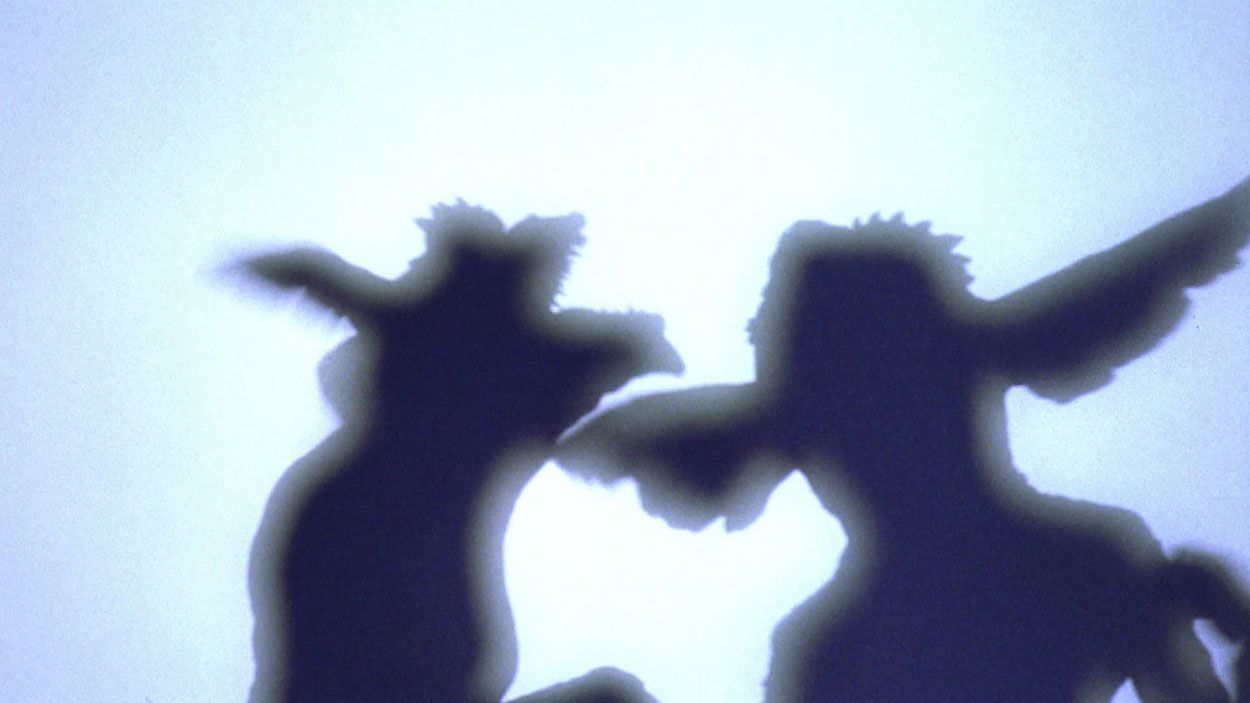
Of course, such autonomy also meant pushing boundaries the studio was never comfortable with. As Dante recalled:
“The studio was just completely against breaking the fourth wall in the movie theater because they don’t like the idea. They don’t like the idea of reminding the audience that they’re watching a movie. And, for me, I love going to the movies and watching a movie and being reminded that I’m watching a movie.” (Consequence.net, 2020)
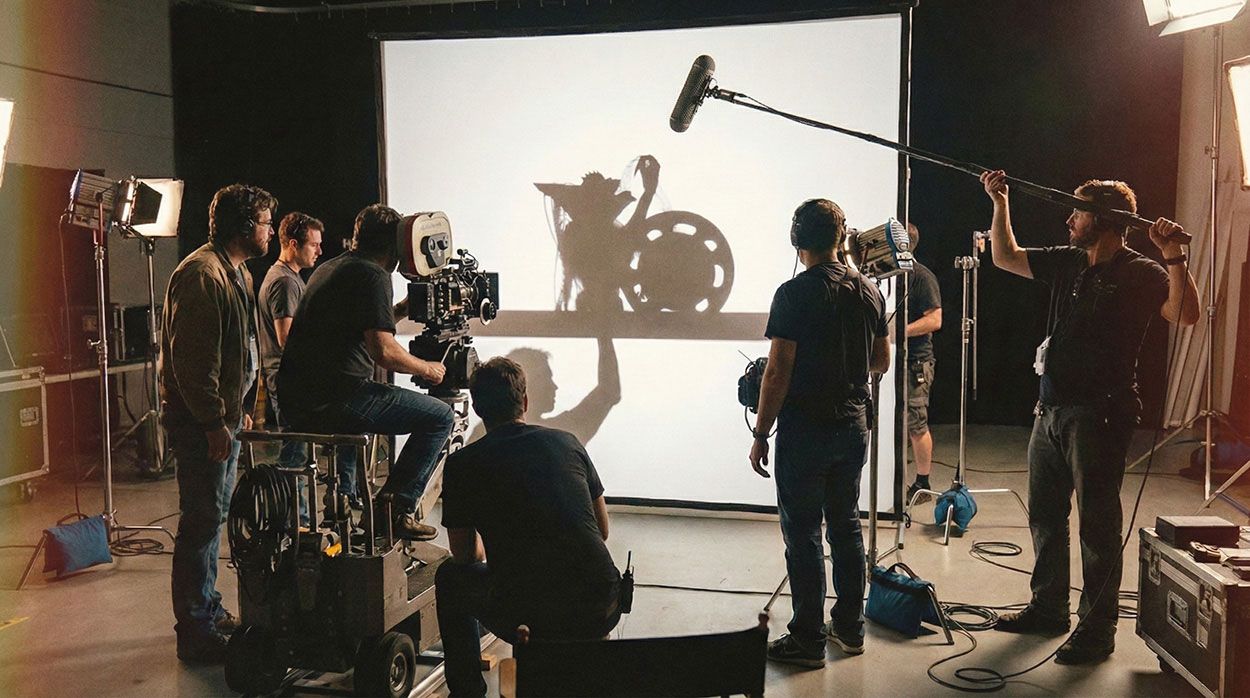
A setup like what would have been seen at VCE while shooting the shadow puppet sequence.
Behind the Scenes
While Joe Dante provided the concept, the execution of the "film break" fell to visual effects supervisor Peter Kuran and his company, VCE (Visual Concept Engineering). Kuran handled the entire sequence, which he describes as running "starting from the film burned frame... through to the last shot of the Gremlin shadow bringing the film reel up to the screen."
The sequence was a complex marriage of practical creature effects and traditional animation filmed off-lot at Kuran's shop. "Rick Baker sent a crew over to operate the actual Gremlins," Kuran recalls. "We shot the Gremlins behind a rear projection screen and we filmed it from the front." (Gremlins Museum, November 2025)
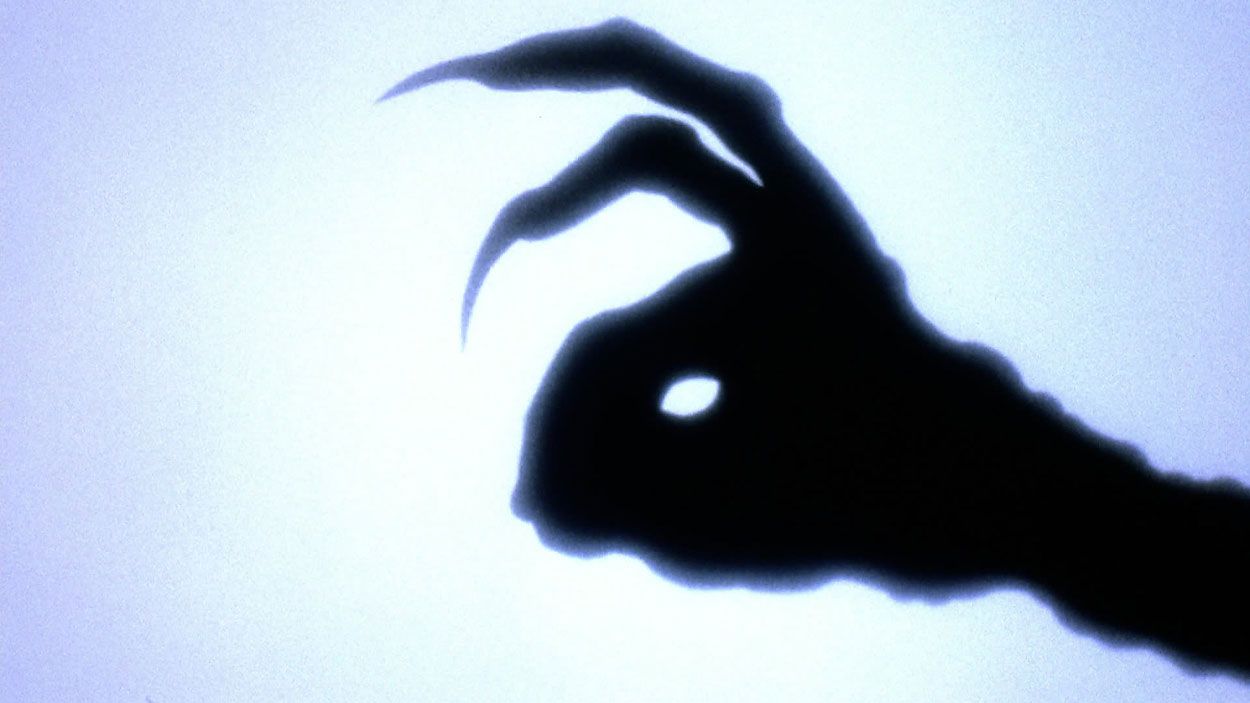
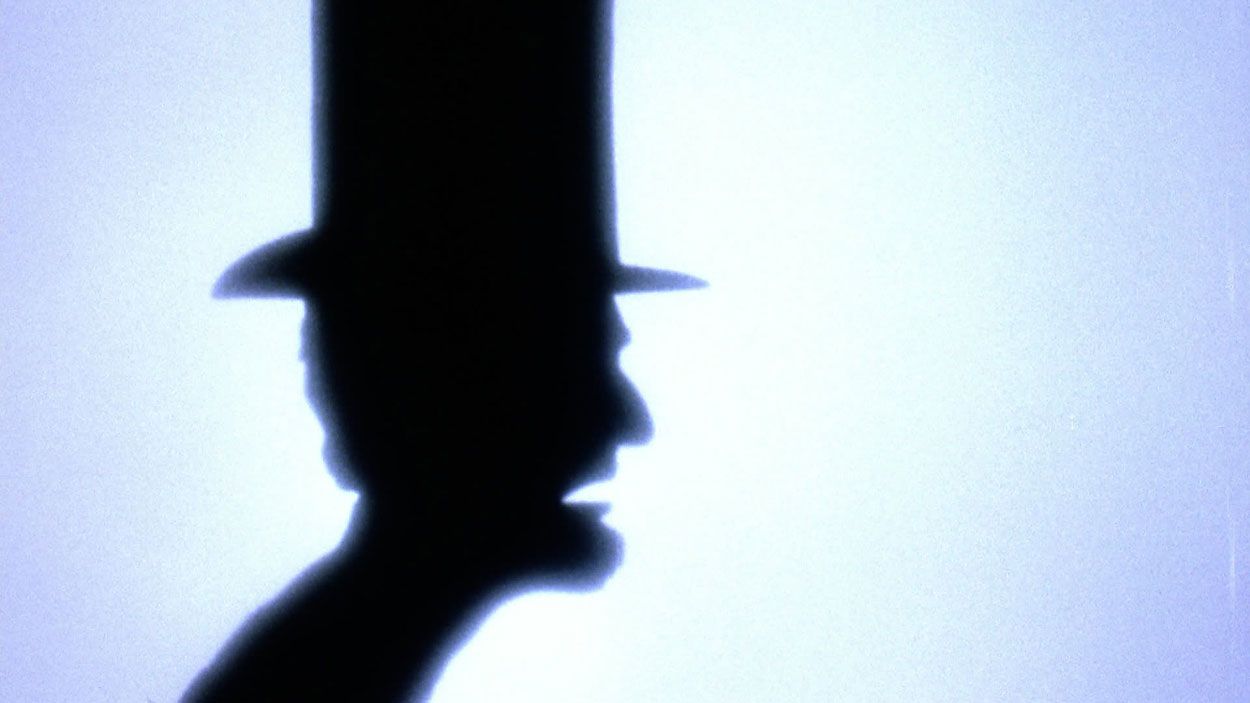
Animation of the bunny and Abraham Lincoln provided by noted artist Mauro Maressa.
However, the Gremlins' dexterity had a little help. According to Kuran, while the full-body Gremlin shadows were practical puppets, the intricate hand shadow puppets—including the bird, the bunny, and the Abraham Lincoln profile were achieved through animation by Mauro Maressa.
Eagle-eyed viewers might also spot a hidden Easter egg in the props. Kuran reveals that the strip of 35mm film the shadow Gremlin holds up wasn't a random prop, but "a Bugs Bunny Cartoon from the collection of Joe Dante and Jon Davison"—a fitting nod to the Looney Tunes anarchy that inspired the sequel.
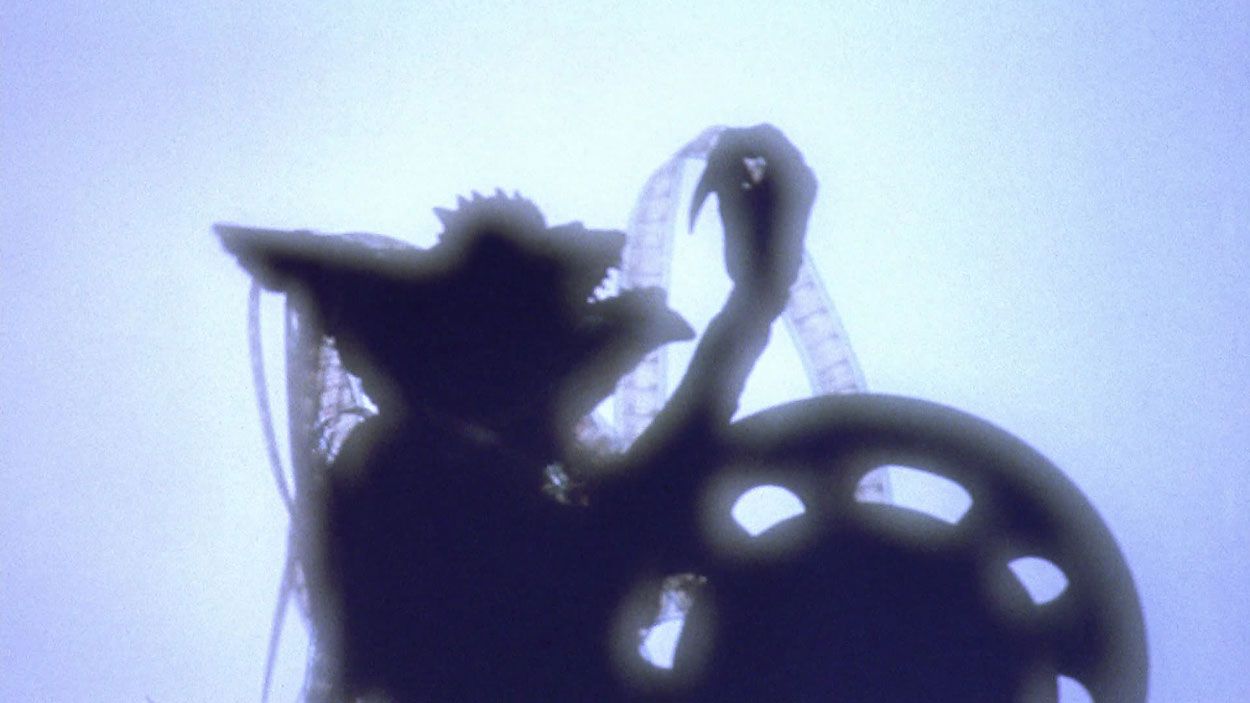
Inside the Theater
After their screen stealing visual gag, the gremlins switch the movie itself, projecting a spurious “special presentation”: an old nudie-cutie film called Volleyball Holiday, a fake title for a very real film called Sun Lovers Holiday (1960), or Nudismo Não É Pecado, it’s original Portuguese title. The film starts playing in lieu of Gremlins 2. It’s a grainy black-and-white beach flick with topless sunbathers (kept PG by strategic camera angles), further baffling the seated audience with the direction this movie was going in.
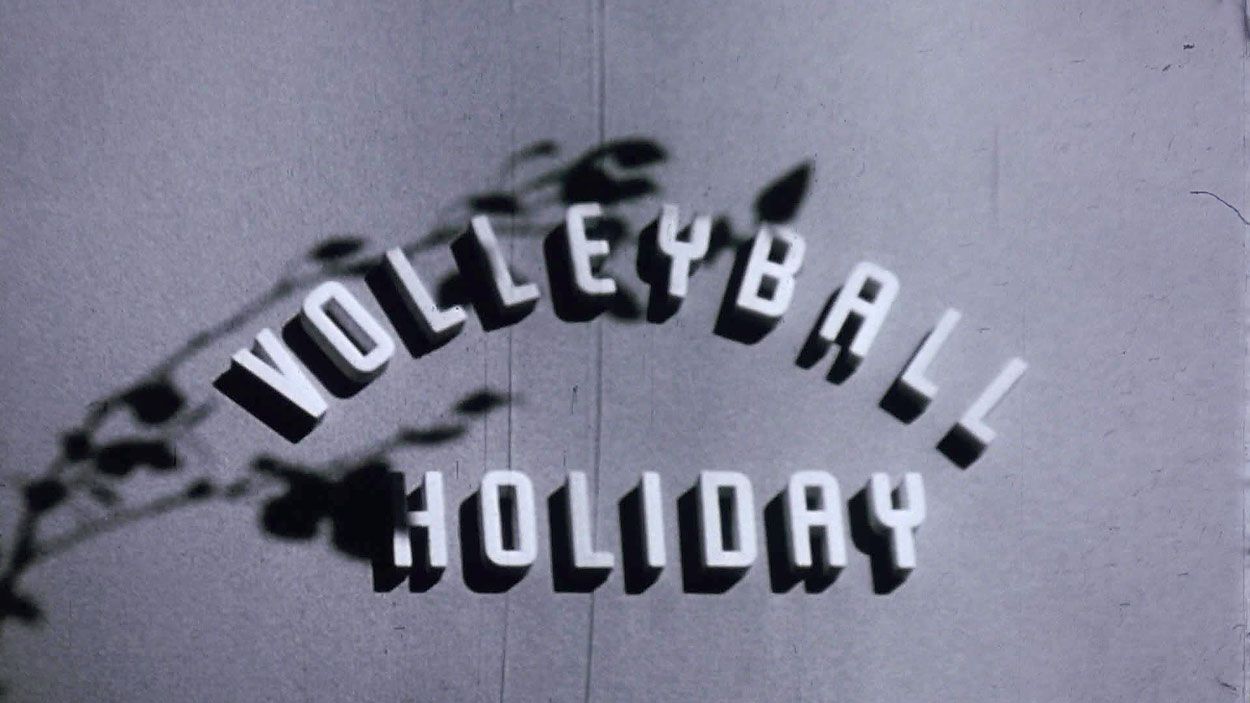
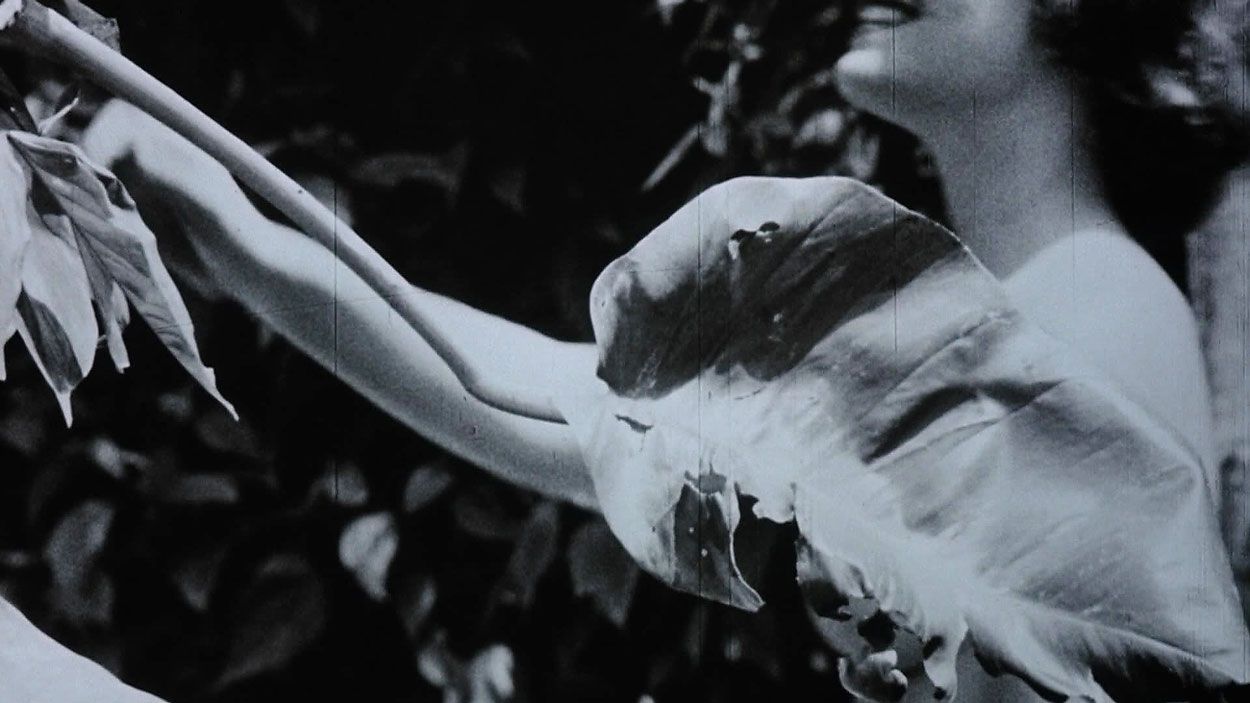
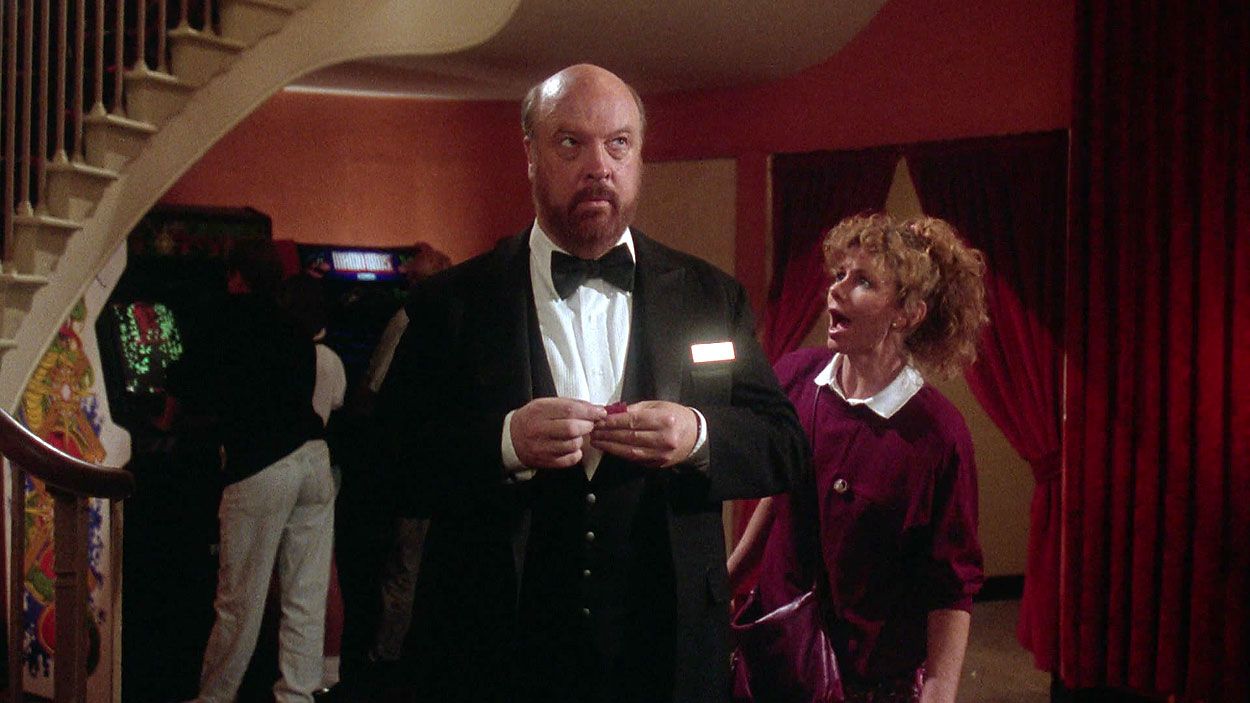
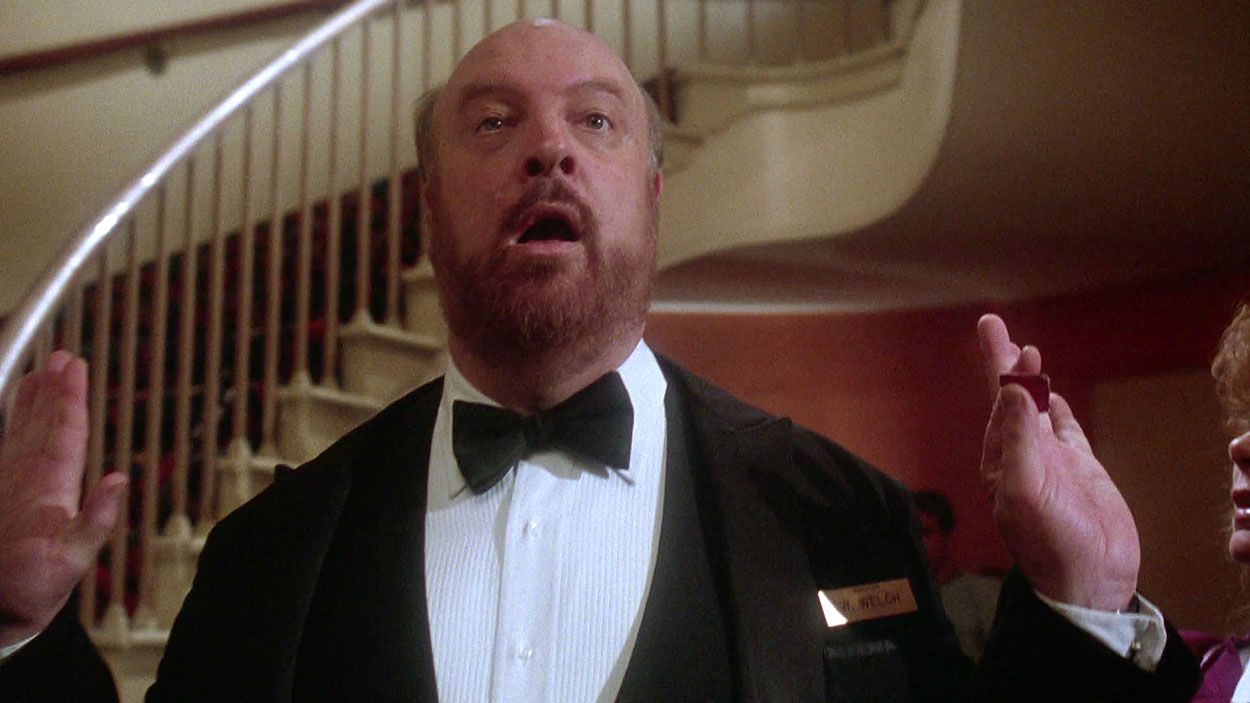
As the “film break” chaos unfolds, the frame cuts to the lobby of the “real” movie theater. A mother, played by Belinda Balaski, storms out, dragging her daughter in protest. She turns on the theater manager, played by filmmaker Paul Bartel, shouting, “Sir! I can’t believe this—it’s worse than the first one!”
Interestingly, the script reveals that this role was originally intended for Steven Spielberg himself. In the early draft, the theater manager was to be none other than the film’s executive producer, calmly turning from the concession counter to assess the disaster. Spielberg’s scripted line—“Damn! I knew I should have directed this one myself.”—would have been a great wink to the audience: Spielberg breaking the fourth wall inside a movie that had already broken its own reel. Ultimately, the cameo never made it past the script page, and Bartel’s deadpan authority filled the role instead.
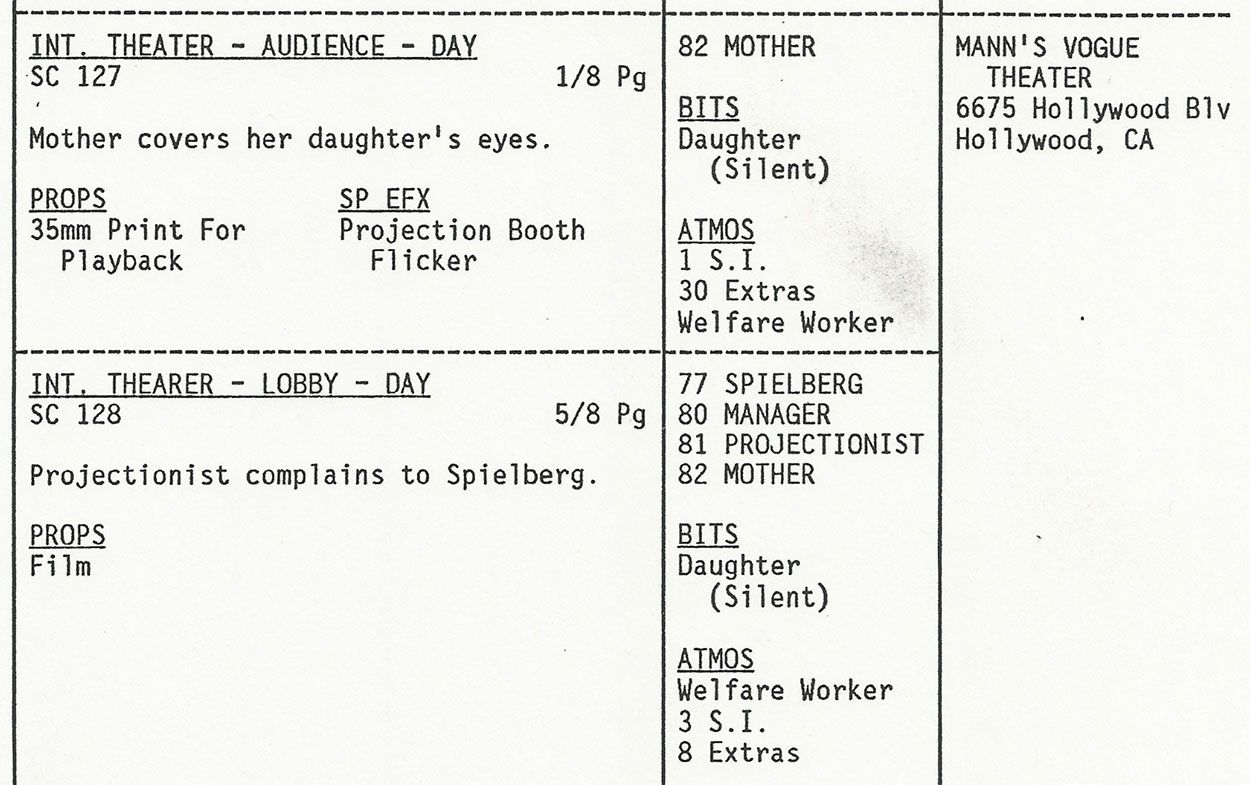
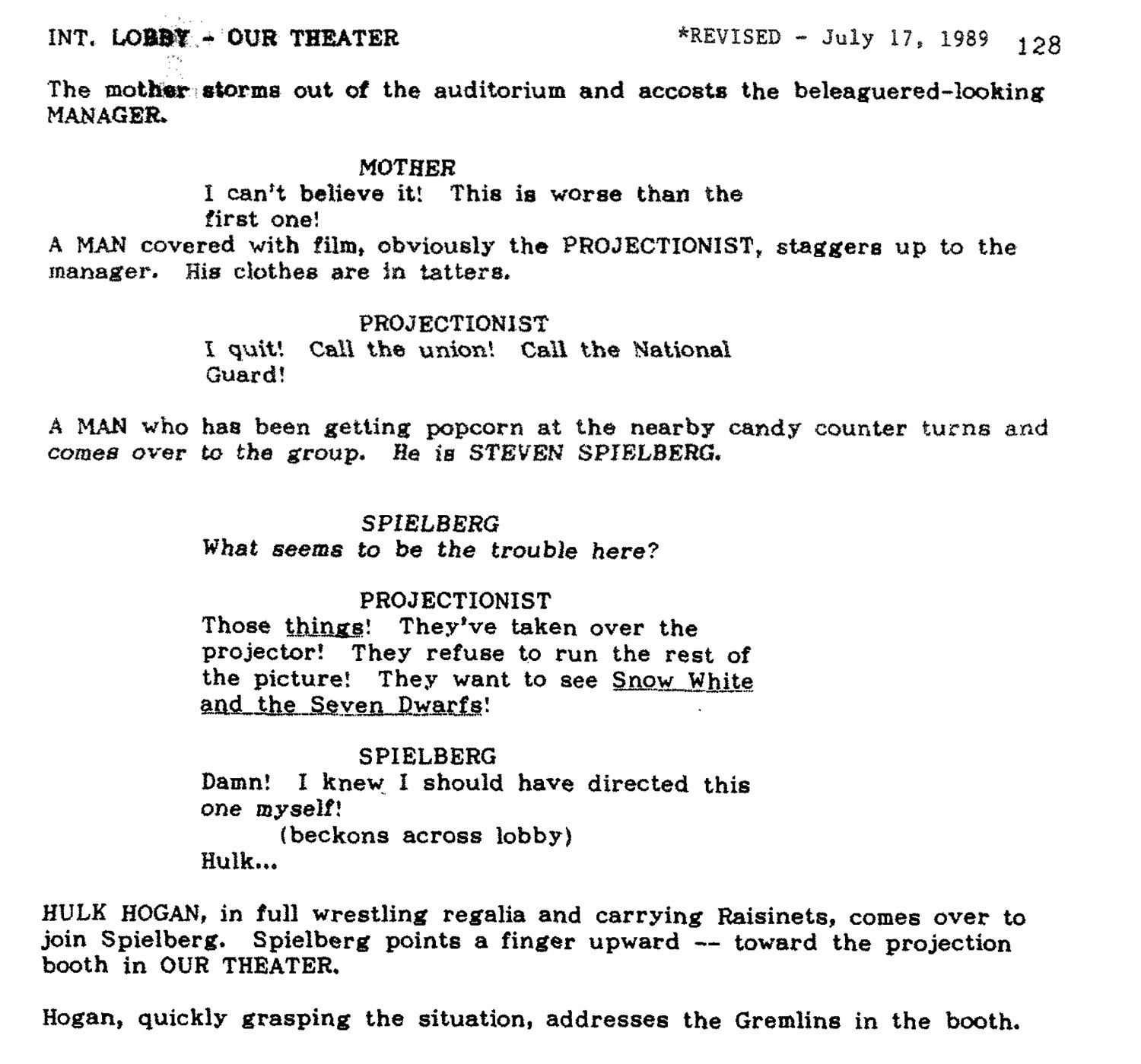
Close to the final shooting script with Steven Spielberg's scene replacing the theater manager.
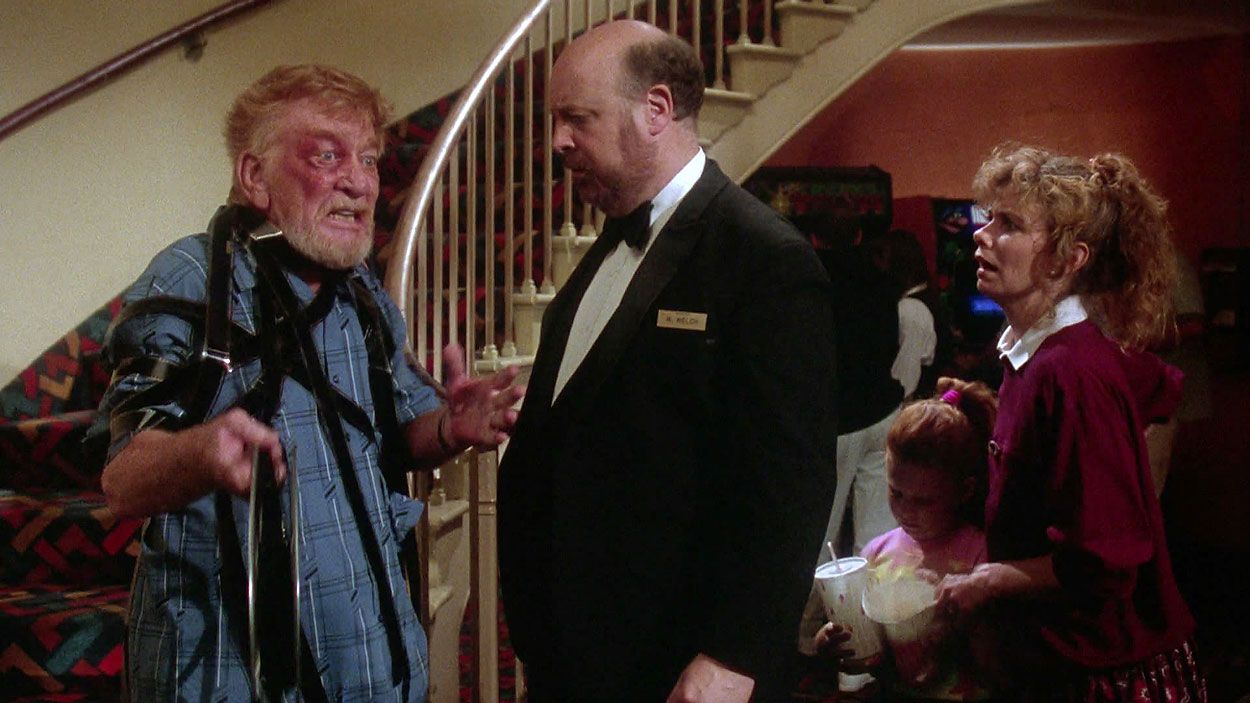
While Bartel’s character assesses the situation, the projectionist, played by veteran actor Kenneth Tobey, stumbles down the stairs, wrapped in film and streaked with blood. “Those things… they’ve taken over the projector!” he cries. “All they want to see is Snow White and the Seven Dwarfs!”
Realizing the situation is spiraling out of control, Bartel steadies himself, declaring, “Enough! I’ll take care of this.” What follows became one of the most unexpected celebrity appearances of the 1990s—an entrance that would cement Gremlins 2’s reputation as the most unpredictable sequel of its era.
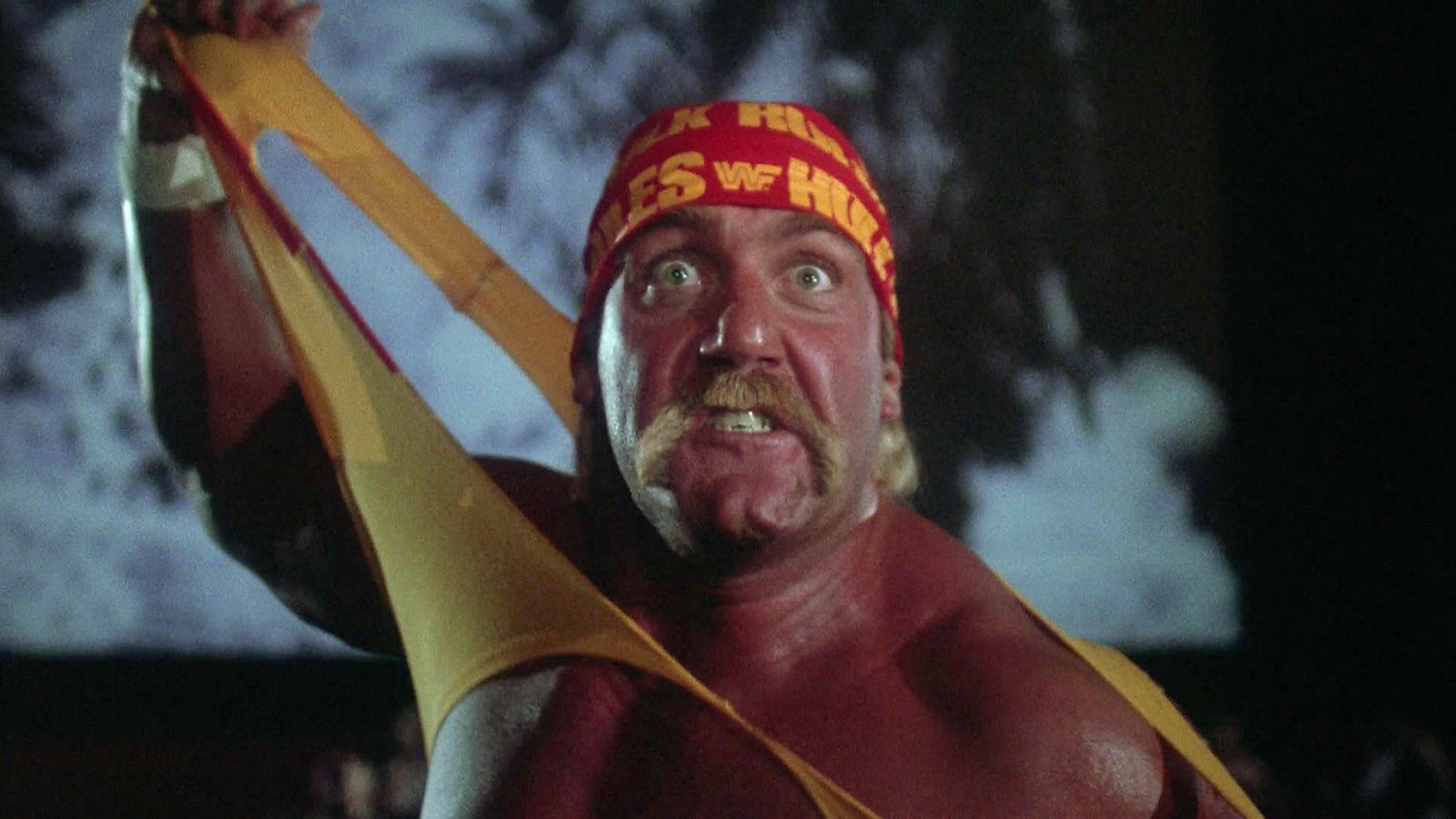
Enter Hulk Hogan
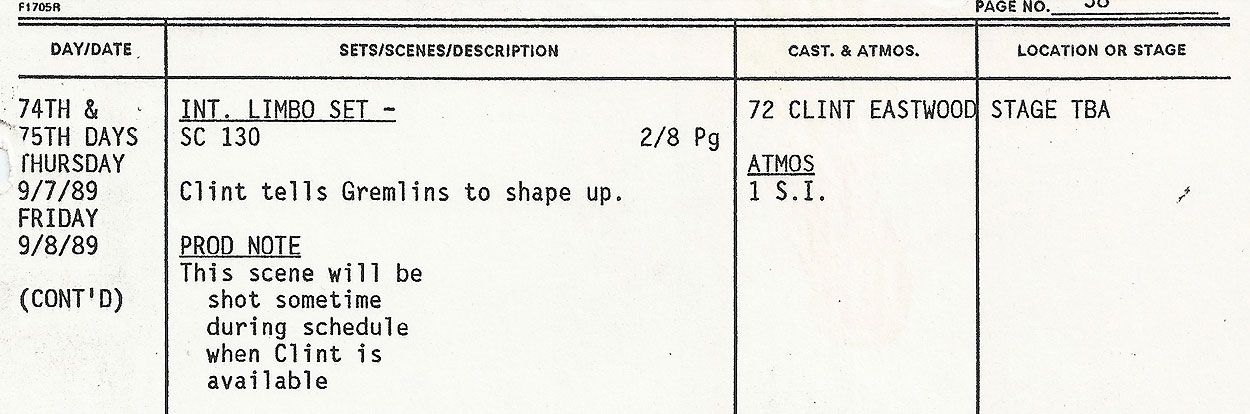
In a 2020 oral history, Mike Finnell revealed that Hulk Hogan was actually their second choice for the “film break” cameo. Production paperwork from the period references Eastwood leading up to the shoot, which was scheduled for September 7th and 8th, 1989 on the Warner Brothers Lot.
Michael Finnell recalls: “We actually tried to get Clint Eastwood to do it until we found out he was shooting in Africa … And then we said, ‘Well who else would be like an intimidating sort of figure?’ And I think it was Joe who said, ‘How about Hulk Hogan?’” (Consequence.net, 2020)
When Gremlins 2 was being made, Hulk Hogan was at the peak of his Hulkamania fame. On set, Hogan’s presence was enthusiastic and literally larger-than-life. “He was a lot of fun. Boy, he was a big guy,” Finnell remembered, noting that crew members were initially intimidated and “nobody’s talking to him or anything” until the scene was underway. (Consequence.net, 2002)
Hogan describes being told he would “run the gremlins out of the theater” and arriving on set eager to meet Spielberg—only to discover that Spielberg wasn’t actually there:
“When I got there, I saw that the dressing room they had set aside for me wasn’t much more than a broom closet... I was so excited about meeting Spielberg that I didn’t care... But instead of Spielberg, I saw this other guy telling people what to do... I realized I was with the second unit director. Steven Spielberg was with the stars of the film... So I went all the way out there and worked on Gremlins 2 but I never got to meet him.” (Hollywood Hulk Hogan, 2002)
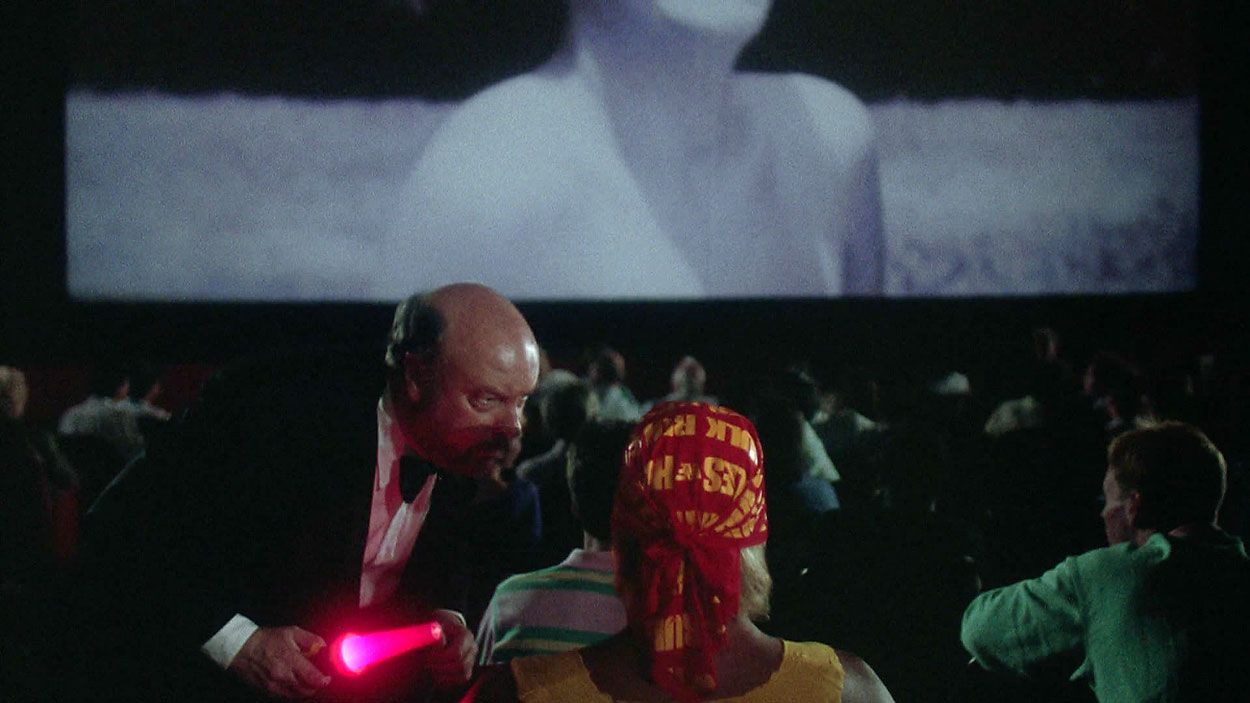
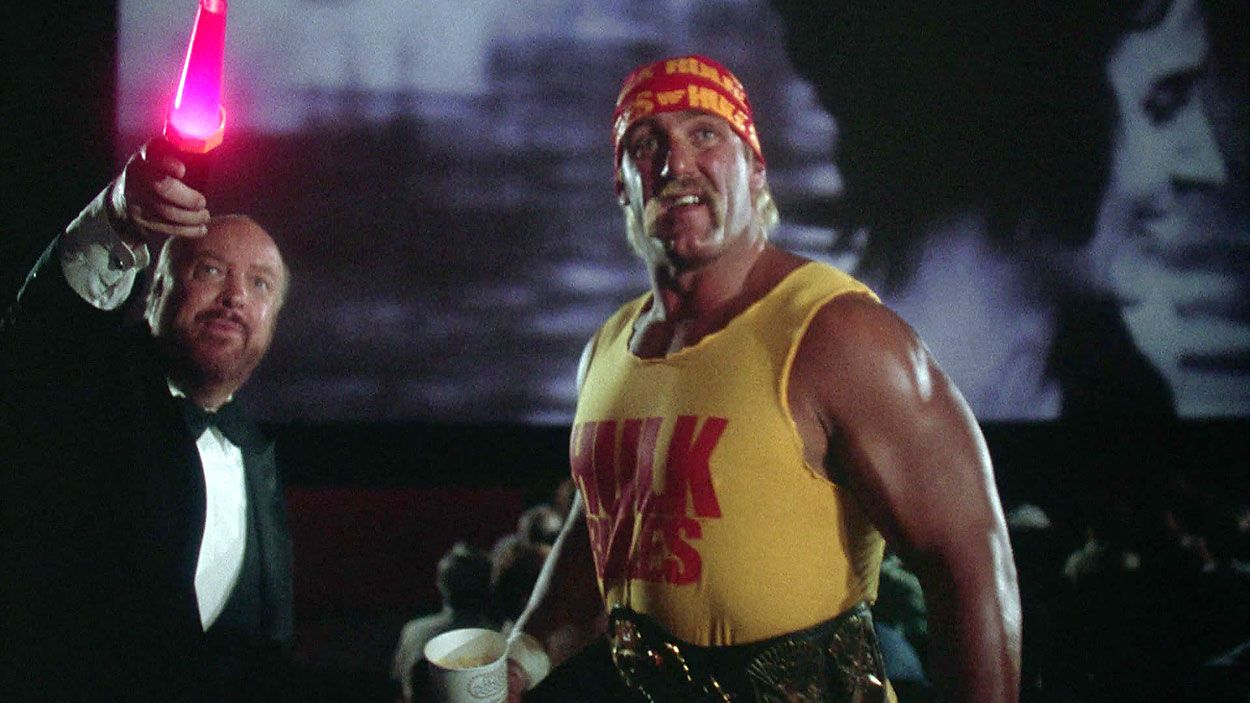
For his part, Hogan approached the cameo with his typical showmanship. In the finished scene, he ad-libbed wrestling-style lines in character (referring to the creatures as “Gremsters” and threatening to knock them out) which amplified the comedic impact. “Do you think the Gremsters can stand up to the Hulkster?” he growls in the film, “If I were you, I’d run the rest of Gremlins 2 right now!” (followed by an apologetic “Sorry, folks, it won’t happen again” to the audience). These tongue-in-cheek lines were delivered in classic Hulk Hogan WWF promo fashion, blurring the line between the wrestler Hulk Hogan and the fictional scenario in the movie’s universe.
It was a quick two-day shoot for a small part, but the chance to work on a Spielberg-produced project thrilled him. As Hogan put it, “I was gonna work with Steven Spielberg… I would have a chance to show him I wasn’t just a yelling, screaming, peroxide blonde maniac. There was more to me than that.” (Hollywood Hulk Hogan, 2002)
He hoped the cameo might even impress Spielberg enough to consider him for future roles beyond the typical muscleman. Hogan joked that he imagined Spielberg thinking, “Maybe I could stick a couple of bolts in [Hogan’s] neck and make him the next Terminator.”
Hulk closes with a warm note about sharing the movie with his children:
“In the end, though, it was cool. I took my kids to see the movie, and when they spotted their dad in it, their eyes popped. And that was just as good as meeting Spielberg. Maybe even better.” (Hollywood Hulk Hogan, 2002)
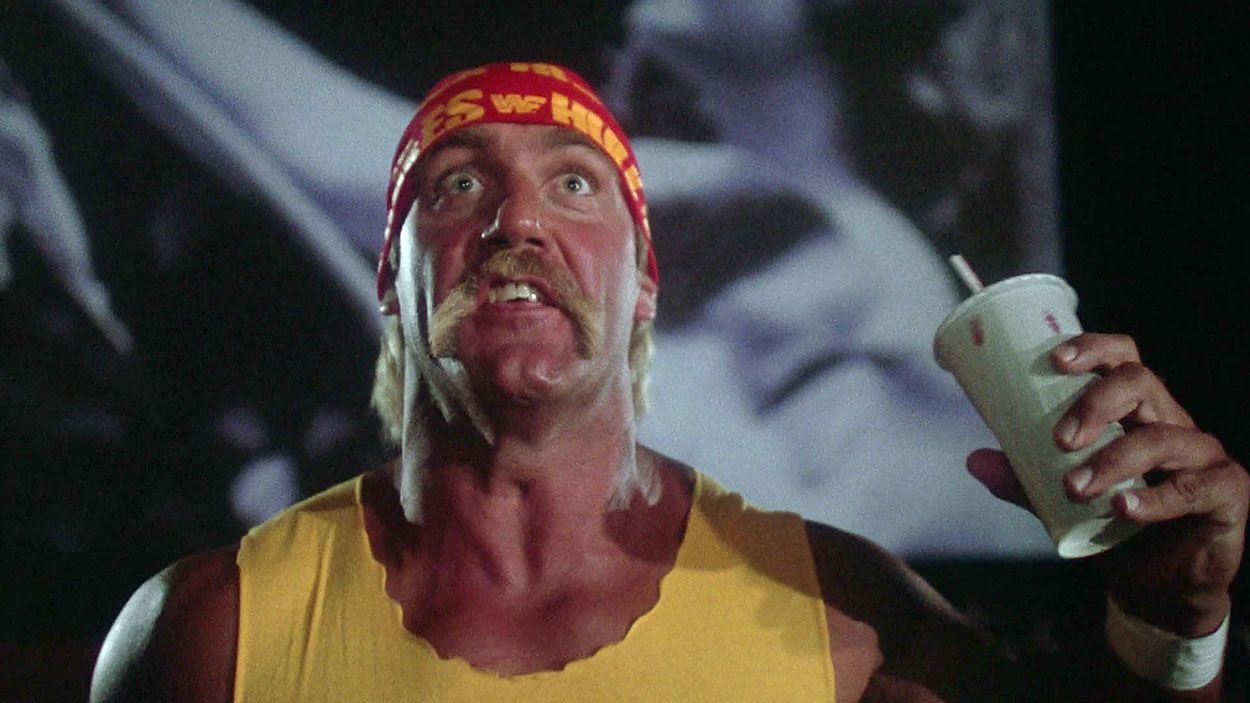
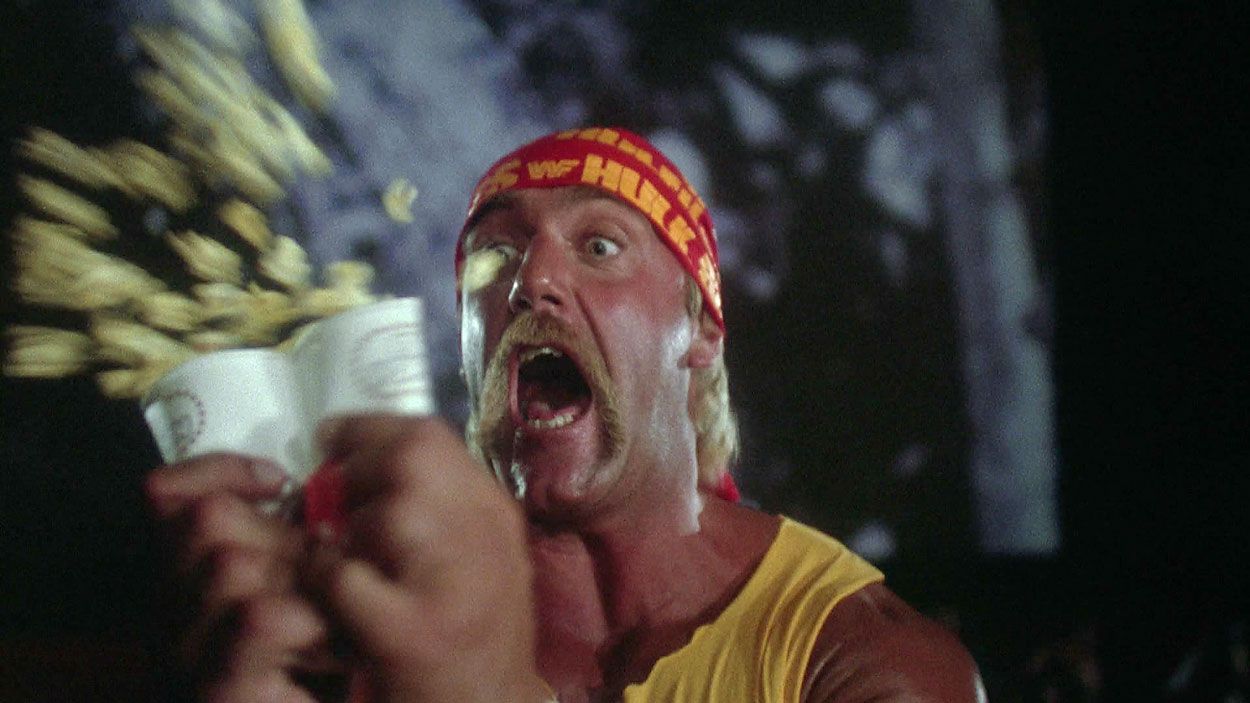
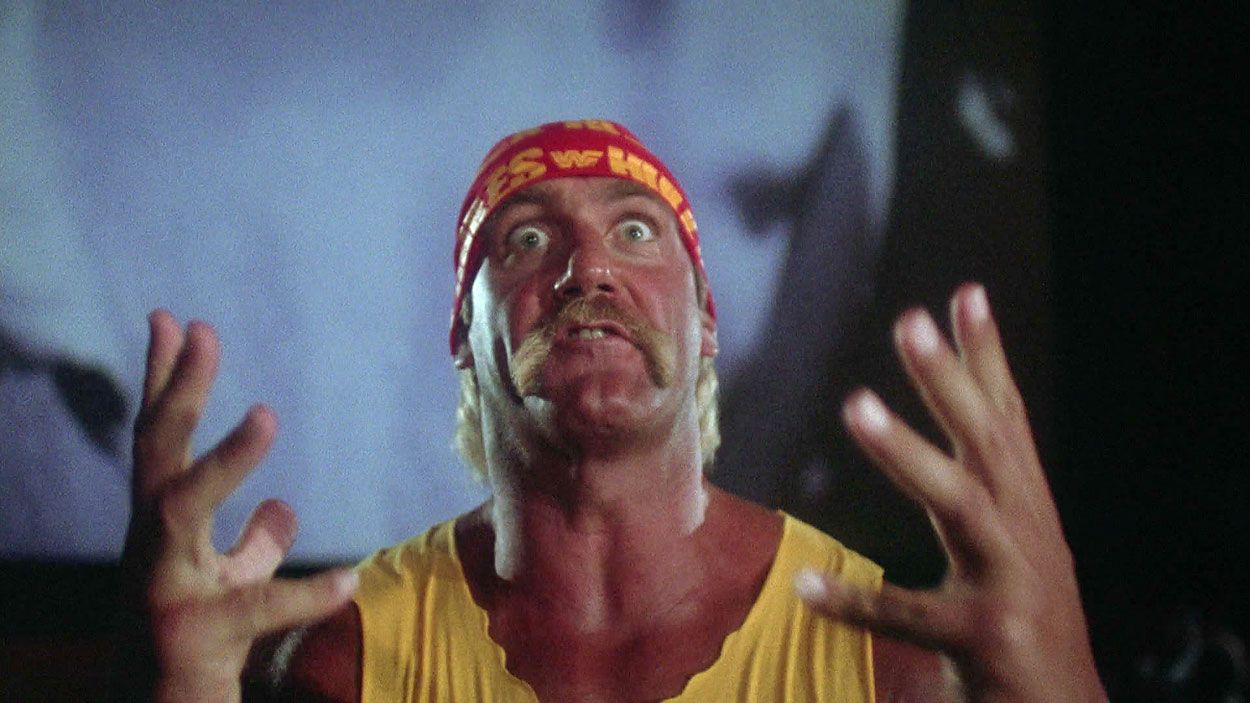
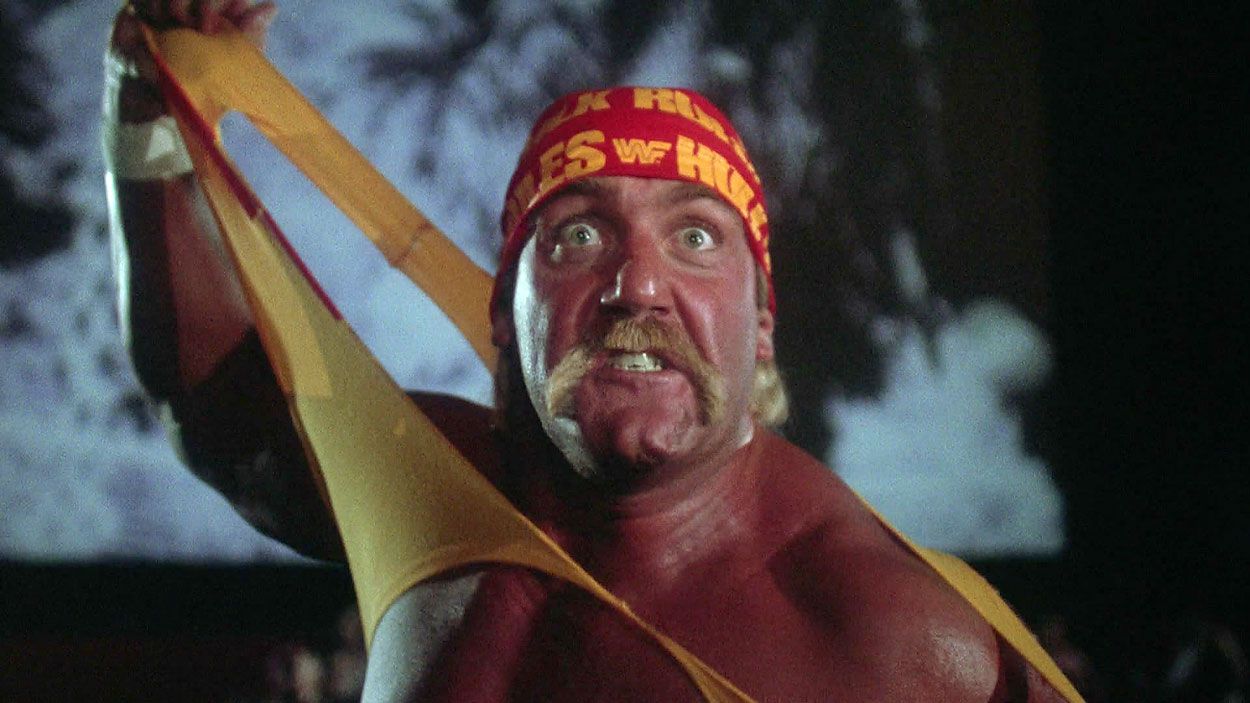
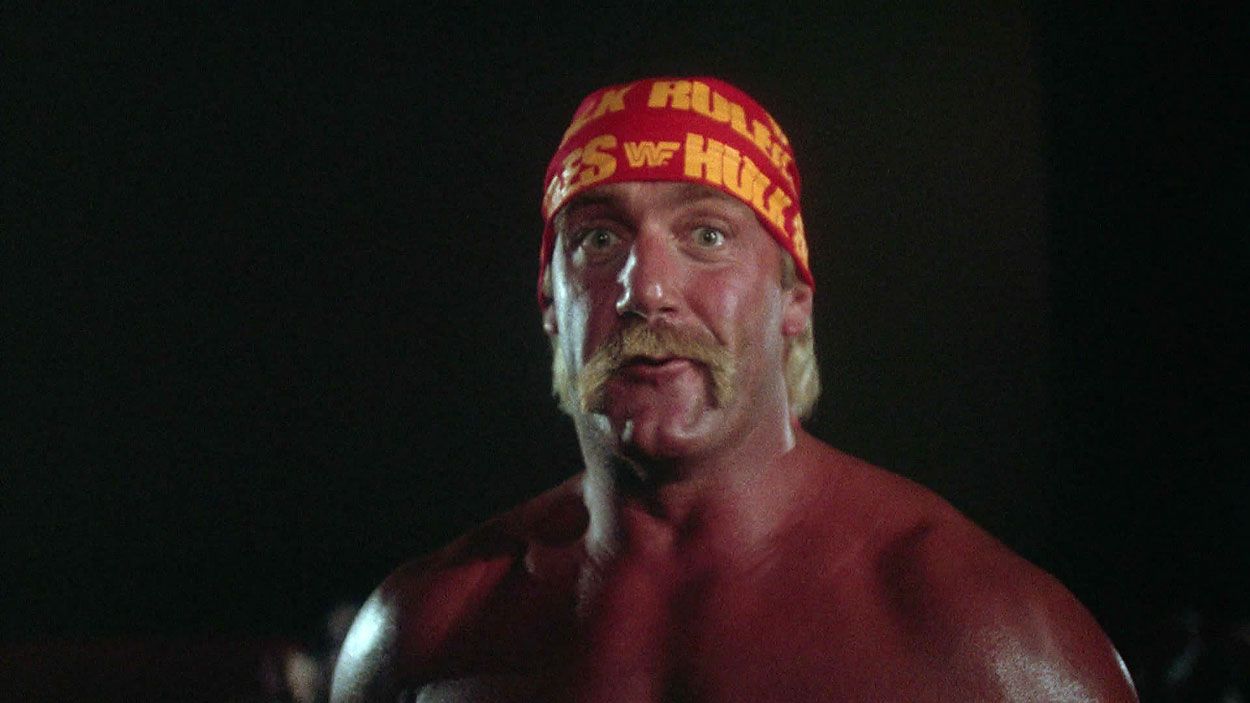
"Sorry folks, it won't happen again..."
Warner Brothers Reaction
The studio’s apprehension about the scene persisted until they saw audience reactions. Dante has said Warner Bros. “completely hated the notion of the scene” at first—they didn’t like any reminder that a film is just a film. Only after positive test screenings did “cooler heads” prevail to keep it. Had the scene not played well, it might have been cut entirely—meaning no Hulk Hogan at all in the final film.
Joe Dante recalls: “The scene where the film seems to break and the Gremlins take over the projection booth was very controversial with the studio because they thought if people think the film is broken, they’ll leave. They let me go to the preview with it and of course it worked great…” (SciFiNow, 2020)
Ironically, the Hogan sequence getting cut almost happened in another way: soon after Gremlins 2 left theaters, most audiences didn’t see the Hulk Hogan bit for years.
When it came time to release Gremlins 2 on VHS in the early 1990s, Dante realized the theater gag wouldn’t translate for home viewers. The original joke assumes you’re sitting in a movie theater; on VHS, watching at home, a “projector malfunction” wouldn’t quite make sense. As Dante put it, “the gag of being in a theater and having the gremlins take over the movie doesn’t really work on your VCR.” So he and the team devised a clever alternative tailored to home video—one that pretends the gremlins are sabotaging your TV and VCR instead of a cinema. Rather than simply reusing the scene for VHS, Dante opted to shoot a whole new sequence, this time revolving around John Wayne and a bunch of western themed gremlins.
For a time, the Hulk Hogan scene disappeared from public view; only the VHS version circulated with the home release. When the DVD and Blu-ray releases restored the theatrical cut, fans finally saw the original version again, and both now coexist as part of the film’s mythos.
Conclusion
The Gremlins 2 “film break” remains one of the most daring and self-aware moments in mainstream cinema—a perfect encapsulation of Joe Dante’s mischievous spirit. What began as a playful homage to William Castle’s theater gimmicks evolved into a full-blown cinematic rebellion, gleefully dismantling the illusion of storytelling itself. Audiences didn’t just watch the gremlins take over—they experienced it.
By smashing through the fourth wall, Dante transformed a summer blockbuster into a living cartoon, where the monsters not only escaped their movie but hijacked the medium that contained them. It was an audacious statement wrapped in slapstick: a reminder that creativity thrives when chaos is allowed to run wild. Decades later, the sequence stands as a monument to what can happen when a filmmaker is given total freedom—and decides the only way forward is to destroy the movie from within.
Special thanks to Charlie Haas and Peter Kuran for sharing their memories for this article.